Monday, 27 October 2025

Sovereignty


Cretin on a rope

MĀORI RANGATIRA NEVER CEDED SOVEREIGNTY say various parties including the Waitangi Tribunal, law professors at the University of Auckland and VUW, and the protestors who dangled in front of Te Papa's Treaty display yesterday and began defacing it.

Because of the difference between the Treaty and Tiriti, said protestors yesterday, Māori at the various Tiriti signings never agreed to what the English translation claimed. Protestors' spokesperson Haimana Hirini said "the English Treaty of Waitangi text was not a translation because it incorrectly stated that Māori ceded sovereignty."

Mr Hirini thinks he knows better than the many Māori who spoke at the various signings around the country in 1840, who were --apparently -- confused. As were the many who, at Kohimarama twenty years later, reaffirmed their decision to sign. Confused, all of them.

Including the rangatira Maihai who, at the Mangungu hui in the Hokianga, said (in opposing the signing) that he would be agreeing to "Kwini Wikitoria" being "the great chief here." [1] (Which was true.)

And the rangatira Raumati, who supported the signing, who told Hobson, "I say come, come now it is for you to direct us and keep us in order."[2]

Or at the Kaitaia signing, where Chief Nopera Panakareao said the new Kawana would be "a helmsman for our canoe." [3]

Or at Waitangi itself, the first signing, when the day began with opposition from several rangatira, including Tareha, of the Ngatirehia tribe, who objected: "We only are the chiefs, rulers. We will not be ruled over. ... Thou high, and I, Tareha, the great chief of the Ngapuhi tribes, low!" [4] He clearly understood the position proposed. And he signed.

And Kawiti, rangatira of the Ngatihine tribe, who objected initially on the understanding that the Kawana would have the power to regulate, saying in horror, "What! ... even I, Kawiti, must no paddle this way, nor paddle that way, because the Governor said 'No' ..." [5] (He signed.)

Or Te Kemara, a rangatira of the Ngatikawa, who clearly understood that agreement would mean the Kawana having police power: "If thou stayest as Governor, then, perhaps, Te Kemara will be judged and condemned. Yes, indeed, and more than that--even hung by the neck. No, no, no. ... Were all to be on an equality, then, perhaps, Te Kemara would say 'Yes'; but for the Governor to be up and Te Kemara down--Governor high up, up, up, and Te Kemara down low, small, a worm, a crawler--No, no, no." [6]  He too understood that, like Roman governor Pontius Pilate in the New Testament (which had been recently translated into te reo and was enormously popular -- with the word governor transliterated therein as "kawana") the kawanatanga to be exercise, and thus ceded by signatories in Te Tiriti, could mean the power of life and death. (He too signed, but not before confessing that Bishop Pompallier had told him "not to write upon the paper, for if he did he would be made a slave." [7])

But not one of the speakers in any of the meetings recorded, even speaking in opposition, used the term "partnership." And no assurance was given anywhere that chiefs would be "up high" with governor in authority, somehow sharing power. The positions were clear to all. Like Pilate's governorship, Hobson's kawanatanga would mean only the Kawana would be "up."

These rangatira were very far from confused, and several had already seen something of the world beyond these shores. Rewa, chief of the Ngaitawake tribe for example, who also initially object to signing saying that "we," the rangatira, "are the Governor--we, the chiefs in our fathers' land. ... What! this land to become like Port Jackson and all other lands seen [or found] by the English. No, no." [8] (He too signed, after saying that Bishop Pompallier "had striven hard with him not to sign" as well. [9])

It was Tamati Waka Nene who turned the day at that first signing on the morning of February 6th: he "rushed into the tent attended by chiefs and other followers" to give "an address to his countrymen in a strain of fervid and impassioned eloquence..." [10] After damning many of the misbehaving "strangers," "foreigners" and "grog-sellers" who covered the land around Korareka -- "even as the grass and herbage" -- Nene turned to Hobson and concluded: "Do not thou go away from us; remain for us--a father, a judge, a peacemaker. ... Stay though, our friend, our father, our Governor. ... Do not listen to what 'the chiefs of ] Ngapuhi say. Stay thou, our friend, our father, our Governor. "[11]

A friend. A father. A judge. A peacemaker. A Governor with elevated authority above the rangatira, with the power to rule, to regulate, to exercise police power -- with the very power of life and death if necessary.

Many of the speakers, it's true -- too many -- picked up on the idea of the Kawana being a "father." Which was certainly unfortunate, and was not corrected. But a judge. And a peacemaker. That was valuable.

But perhaps it was intended, even so, that the Governor/Kawana only have sovereignty over settlers? Not so, Hobson corrected a rangatira at the Hokianga meeting, who had expressed that view, explaining calmly that "English laws could only be exercised on English soil."[12]


IT MIGHT STILL BE THOUGHT that, perhaps, rangatira remained confused, and were only signing because they thought the "strangers" and "foreigners" would remain in low numbers, and could be ignored. Yet, two decades later, at Kohimarama, while the Kingitanga in the Waikato were expressing violent opposition to the government, and after "tangata Tiriti" now outnumbered tangata whenua in these islands (this point was officially passed in 1858[13]), several of these same signatories were invited to reaffirm their support for Te Tiriti. Which they did, Tamati Waka Nene telling listeners why he had supported the signing so vehemently:

0 people listen: These are my words for ourselves to Speak about the Governor and about the Pakehas. I am not accepting the Pakeha for myself alone but for the whole of us. My desire when Governor Hobson arrived here was to take him as our Governor in order that we might have his protection. Who knows the mind of the Americans or that of the French? Therefore I say let us have the English to protect us. Therefore my friends, do I say, let this Governor be our Governor and this Queen our Queen. Let us accept this Governor, as a Governor for the whole of us. Let me tell you, ye assembled tribes, I have but one Governor. Let this Governor be a King to us. Listen again, ye people! When the Governor came here he brought with him the Word of God by which we live; and it is through the teaching of that Word that we are able to meet together this day under one roof. Therefore I say, I know no King but the Queen [i.e., he rejected the Māori king] and I never shall know any other. I am walking by the side of the Pakeha. Mr. McLean, this is all I have to say. People of the Runanga I have finished.[14]
The putative host for the hui, Paora Tuhaere of Ngati Whatua o Orakei agreed, saying:
Hearken, all ye people to my words! These were my words to the first Governor, to the second Governor and to the third Governor: I want the Laws of England. Hearken, ye people, two things commend themselves to my mind - the Governor and the Queen. For thereby do we, both Pakeha and Maori, reap good. This is my speech. The best riches for us are the Laws of England. [15]
"The Kohimarama Conference had begun with then Governor Gore Browne recalling to those assembled (including more than 100 rangatira from Nga Puhi in the north to Ngai Tahu in the south):
On assuming the Sovereignty of New Zealand Her Majesty extended to her Maori subjects her Royal protection, engaging to defend New Zealand and the Maori people from all aggressions by any foreign power, and imparting to them all the rights and privileges of British subjects; and she confirmed and guaranteed to the Chiefs and Tribes of New Zealand, and to the respective families and individuals thereof, the full, exclusive and undisturbed possession of their lands and estates, forests, fisheries, and other properties which they may collectively or individually possess, so long as it is their wish to retain the same in their possession.
    In return for these advantages the Chiefs who signed the Treaty of Waitangi ceded for themselves and their people to Her Majesty the Queen of England absolutely and without reservation all the rights and powers of Sovereignty which they collectively or individually possessed or might be supposed to exercise or possess.
The astute reader will notice that these are almost exactly the words to which yesterday's protestors expressed such violent objection -- that is  to say, almost a recapitulation of the Treaty terms.

The Conference itself concluded on 10 August 1860 with rangatira gathered there giving unanimous agreement that:
the several Chiefs, members thereof, are pledged to each other to do nothing inconsistent with their declared recognition of the Queen's sovereignty and of the union of the two races ... [16]
It was Apirana Ngata six decades later who reminded Māori that 
The Government placed in the hands of the Queen of England, the sovereignty [mana] and the authority to make laws. ... it made the one law for the Maori and the Pakeha. If you think these things are wrong and bad then blame our ancestors who gave away their rights in the days when they were powerful.
Those ancestors were not stupid. They knew what they were about, and and had a pretty fair idea of what they were promised.

But perhaps they knew less about what they were agreeing to and signing than the geniuses who took power tools yesterday to Te Papa to make their argument.

NOTES:
1. Waitangi Tribunal 2014, p. 380
2. Waitangi Tribunal 2014, p. 383
3. Lindsay Buick, The Treaty of Waitangi, 1914, p. 150
4. W. Colenso, The Authentic and Genuine History of the Signing of the Treaty of Waitangi, 1890 facs., Government Printer, (reprint, 1971, by Caxton Press) p. 24
5. Colenso, p. 22
6. Colenso p. 17
7. Colenso, p. 34
8. Colenso, p. 19
9. Colenso, p. 34
10. Felton Mathew, The Founding of New Zealand: The Journals of Felton Mathew, ed. Rutherford, 1940, (AH & AW Reed for Auckland University College) p. 37
11. Colenso, p. 27
12. Waitangi Tribunal 2014, p. 380
13. "In 1858 [Māori] were estimated at 56,049, of whom 31,667 were males and 24,303 were females." History of New Zealand, Rusden, Vol II. ch. 12. Population of non-Maori was now 59,328. [Stats NZ]
14. Te Karere Maori, July 13th, 1860, p. 15
15. ibid
16. Claudia Orange, in her discussion of the Kohimarama Conference ("possibly the most important gathering of chiefs since Waitangi," p. 77), notes that "sovereignty" was translated in the proceedings as "mana." Ref: 'The Covenant of Kohimarama,' NZ Journal of History, July, 1980, pp74-75
17. Proceedings of the Kohimarama Conference, comprising Nos. 13 to 18 of The Maori Messenger. 

Monday, 20 October 2025

"Reputable historians do not present grown human beings as innocent children, or confused savages, incapable of understanding the political, economic and military realities of their time."

 "History, like so many other subjects, has become a bitterly contested ideological ground. A discipline where angry partisans struggle for supremacy.

    "For the moment, at least, the upper hand [in NZ] lies where it has lain for the past 50 years – with the [Waitangi] Tribunal. For most of that time New Zealanders assumed that those weighing the evidence which claimants brought before the Tribunal were dispassionate professionals. Only relatively recently has it become clear that the Tribunal’s 'history' is little more than compensatory fiction, composed by Māori and/or Māori-identifying “historians” to clear the way for the Crown’s acknowledgement of wrong-doing and, ultimately, to secure compensation for the manifold sins of our colonial fathers. ...
    "[The Tribunal is clearly in steadfast agreement with] Māori Treaty historians. Māori scholars, and their allies, [who] present colonisation as an unmitigated disaster: an historical catastrophe from which the indigenous people of New Zealand are only now beginning to recover. ...
    "Its reports are based on the testimony of the aggrieved, and upon their carefully curated historical grievances. Only to this 'evidence' does the Tribunal accord the status of unchallengeable truth. And only these, the Tribunal’s truths, are allowed to prevail over what is invariably characterised as the evil historical choices of the Crown.
    "That this Manichean historiography cannot help but infantilise Māori, turning them into trusting dupes of the wicked Pakeha, and denying them the dignity of effective historical agency, is deemed an acceptable price to pay by a Waitangi Tribunal determined to deliver to Māori claimants a browbeaten and guilt-ridden Crown. ...
    "Reputable historians do not present grown human beings as innocent children, or confused savages, incapable of understanding the political, economic and military realities of their time. Nor do they construct frankly ridiculous constitutional scenarios in which the British Government of 1840 was happy to share power ... Since 2014, the Waitangi Tribunal has been indulging in what might best be called 'Bridgerton History' – i.e. refashioning the realities of the past to meet the ideological specifications of the present."

~ Chris Trotter, from his column 'Contested Ground'

Monday, 13 October 2025

"New Zealand was born free without having to become so"

 "Self-government and the rule of law came to New Zealand from above. These great principles were ordained by imperial authority. The result, to paraphrase de Tocqueville, was that New Zealand was born free without having to become so. It never had to fight for self-government, or win its rights by armed struggle."

~ Historian David Hackett Fischer, from his book Fairness and Freedom: A History of Two Open Societies: New Zealand and the United States

Monday, 6 October 2025

Governor Grey who would frequently “quote Carlyle’s theory of despotism as the best of all systems of colonial government.”


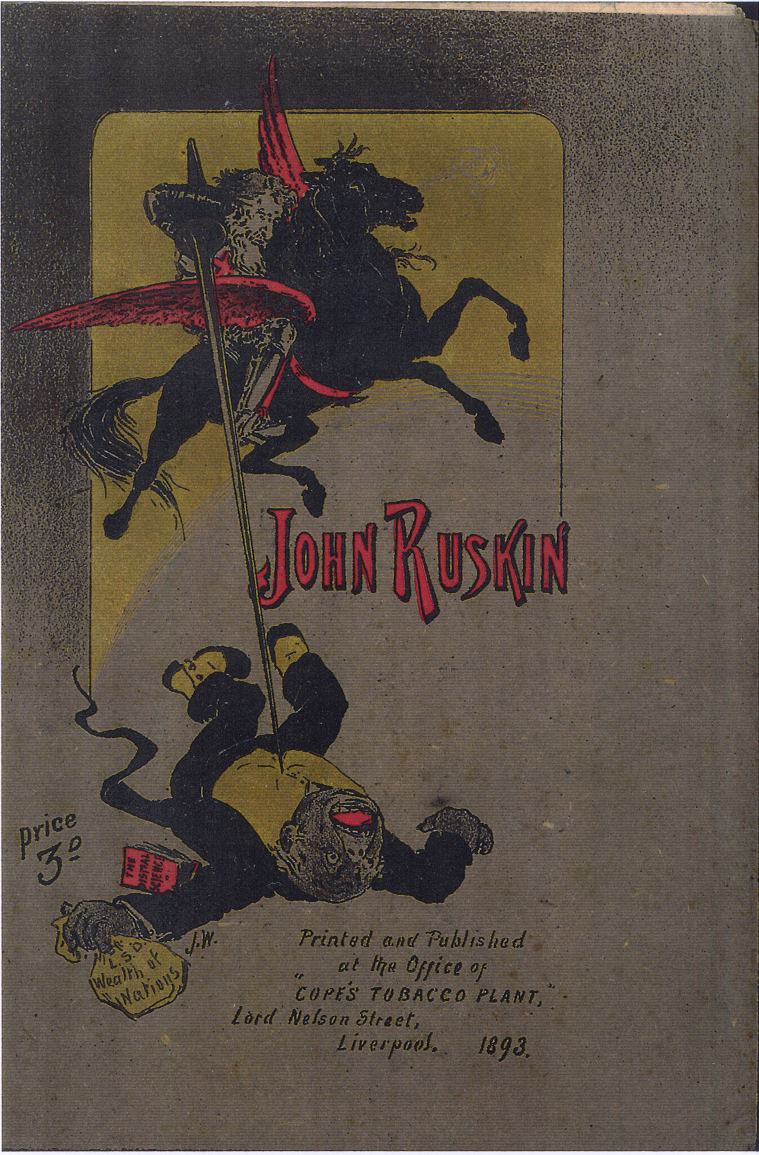
"In my interview with economist David Henderson, I asked him how economics came to be called the 'dismal science.' The source, he explained, was Thomas Carlyle, the nineteenth-century historian and essayist. The surprising reason for his coining the phrase? Carlyle was attacking free-market liberals for advocating the end of slavery.
    "Free-market liberals argued that all men were equally deserving of freedom, so the slaves should be emancipated. Carlyle counter-argued — with strong agreement from Charles Dickens and John Ruskin, two other strong critics of free-market capitalism — that blacks were unequal to whites and so undeserving and incapable of freedom. Giving slaves freedom, they believed, would lead to dismal social consequences.

    "Here is a fine essay by David Levy and Sandra Peart with the sorry details: “The Secret History of the Dismal Science. Part I. Economics, Religion and Race in the 19th Century.”
    "The image, as Levy and Peart explain, shows Ruskin as a white knight slaying a black man dressed in gentlemen’s finery and holding a book entitled 'Wealth of Nations,' Adam Smith’s treatise being a major work in the free-market capitalist tradition."

PS: Notable, I think, that Carlyle has also been called one of the founding fathers of fascism, and was also a major influence on New Zealand's Governor Grey, who would frequently “quote Carlyle’s theory of despotism as the best of all systems of colonial government.”[1]

[1] Kennedy, A. New Zealand (1873), 143, 147; cited in Rutherford, Sir George Grey (1961), p.283 

Monday, 29 September 2025

Again, why did chiefs sign?


p. 62, Michael Belgrave's Historical Frictions

"[Historian Michael] Belgrave argued* that a study of the debates that took place at the Treaty meetings revealed that they were mostly about land and religion, rather than sovereignty, indeed that these matters overshadowed everything else. ...
     "[O]ne of the most important messages the chiefs would have taken away from what the British or Pākehā advocates of the Treaty had declared was that Māori would be protected in their lands, and that this was a vital consideration for those who agreed to sign ...
    "Belgrave argued that while the Treaty was made in a world in which Māori remained dominant, the chiefs were acutely aware that times were changing and they felt vulnerable, and that in these circumstances they believed it made sense to sign the Treaty and hoped that the British Crown would uphold the promises it had given ...
    "He held that a properly historical account revealed ... [that] by the time the Treaty was made, Māori had adopted, adapted and adjusted [to] the European ideas they had encountered ...
    "[T]he ‘modern’ interpretation of the Treaty [however] — which he attributed to those he called ‘non-historians’, thereby obscuring the role that academic historians, most of all Claudia Orange, had played in its creation — ... had become so preoccupied with the texts that it had become blind to matters of context. ... 
    "[T]he worldview that informed [chiefs'] understanding of it in 1840 had become opaque to contemporary readers because of an undue focus on the written texts. In and of themselves, he held, the texts were extremely limited sources on which to base any historical interpretation ... [and so] the story the Tribunal had been telling was more or less a fiction or an invented history ..."

~ Bain Attwood, from his 2023 book A Bloody Difficult Subject
* In his 2005 book Historical Frictions: Maori Claims & Reinvented Histories, esp. pp. 46-66

Monday, 22 September 2025

"Why, when they were so strong, did Maori invite the British in?"


Sources here.

"The view that the Treaty has become the straitjacket of Maori history is the starting point for the present study. ... 
    "When Europeans stepped into the southern dawn, the people who had thought of themselves as constituting the whole human world found that they were one of its fringes. ... Assertive and risk-taking in cultural personality, Māori fought to eradicate their fringe status by pursuing modernisation, including the political modernisation that would create a path to the Treaty ground. .... The question then becomes why, when they were so strong, did 
Māori invite the British in? ...
    "Because 
Māori society [had been] organised around the chance of war, the initial effect of the introduction of muskets was indeed the expansion of tradition. Serial wars followed from the idea of their possibilities. Soon enough, however, war became an agent for its own collapse. Nga Puhi’s raids were predatory larks, fought for neither territory nor strategic advantage. ... 
    "[T]he terror of the gun [had] caused social disruption analogous in principle to that of current world ethnic strife. From Auckland to Whangarei was empty. The Hauraki tribes fled inland, and Ngati Kahungunu to the tiny edge of their vast territory. Modern Taranaki was deserted, and some of its displaced people virtually exterminated the Chatham Island Moriori. Ngati Toa, forced into pre-emptive migration, ravaged the south — the list is representative but not exhaustive. Similar things had occurred in the history of most tribes, but there is no previous evidence of near-total war. A detached modern historiography lists battles, but makes the musket wars events without real effects. Yet the wars were a modern catastrophe for 
Māori, not a traditional one. ...
    "In the 1830s northern 
Māori sought meaning in their post-contact experience through understanding how the foreigners ordered their world. This was a period of rational and intellectual response to European culture in which Christian teaching became a political primer for change. Consciously replaying the conversion of the barbarians, the missionaries taught that peace was the condition of political and social modernity — that is, of a European-style society.
    "This impacted heavily on culture, because tribal histories were almost exclusively histories of war. Fighting was central to the social identity of 
Māori. [It set] up peace as the condition of modernity ...
    "Their attention to the missionaries, and subsequent support for a treaty with the British, was not without history, but a response to lived change. By this reading, then, a possible basis of 
Māori citizenship was rational choice.
    "The rationality of the chiefs has been obscured by the rationality of the British side of the Treaty, which entirely dominates the literature."
~ Lyndsay Head, from her article 'The Pursuit of Modernity in Māori Society'

Tuesday, 16 September 2025

First Labour's State-Housing Story is a Con

THE SATURDAY AFTERNOON OF 18 September 1937 was warm and clear as a furniture truck pulled up outside a new house in Miramar. Greeted there by a crowd of cabinet ministers, a Prime Minister, 300 onlookers and a small gaggle of press photographers, doors were opened, cameras were loaded, sleeves were rolled up, and the crowd was treated to the spectacle of four cabinet ministers and one parliamentary undersecretary bump their way inside the house with a handful of furniture for the new house’s selected tenants. 

“Everybody is happy” oozed the state broadcaster.[1]

Prime Minister Savage himself earned warm praise for his treatment of a chair, carrying it in “without a hitch” – which “in front of some hundreds, calls for more poise and purpose than the average person can muster.” Ministers of Finance and Defence also earned praise for showing the crowd how to handle a chair, while “the coatless Minister of Public Works,” Bob Semple, also helped Prime Minister Savage “to carry in a solid-looking table.”[2] “Labour Ministers, Indeed” sang the headline in the Auckland Star­ – appearing, however, only on page six’s ‘News of the Day’ below several headlines the editor clearly considered more important, including one about “Red Tape” in laying out school playgrounds in Te Aroha, and another trumpeting the birth of a two-headed calf in Hikutaia, the second in the neighbourhood in as many months![3]

The house was conveniently located inside the Minister of Public Works’s electorate, one of eight state houses in the electorate and 500 others around the country already completed, with another 1485 under way on the way to his target of 5,000. “The only thing standing between the Government and the achievement of its purpose,” said the Prime Minister in his speech, “were labour and materials.” Those, along with “at least £16,500,000 to £17,000,000,” and he and his team of removalists would be “more confident than ever that we could do the job.”[4]

The nation was lucky enough to hear all the speeches over the newly-nationalised ZB radio network, which was compelled to drop its regular programming to carry the speeches,[5] while the Prime Minister and his team were lucky enough to have the newly-nationalised Reserve Bank on their side to help lend cheaply for the political promises. In April 1936 Finance Minister Walter Nash had assured a public wary of the nationalisation that he did not intend “to sit down and merely turn the handle of the printing press.”[6] But like every politician before or since, he lied. Between 1936 and March 1939 the Reserve Bank borrowed into existence £12.2 million for the Labour Government’s programmes – £5.6 million of this was low-interest loans for Lee & Semple’s housing programme.[7]

With improved employment, and those who had delayed marriage now affording to do so,[8] demand for rental houses had been steadily building. But supply had been discouraged by, among other things, a new rent control law which required a magistrate’s agreement before rents could be raised[9] -- just one of fifty-nine public Acts of parliament passed in Labour’s first year.[10]

The mythology is that the First Labour Government rescued a country from depression and housed a nation. This mythology is mostly bunk from first to last.

By November 1935, when Labour were elected and announced a Christmas bonus to all voters, it looked to an electorate eager for good news like salvation was at hand. 

In reality however, the Depression years here, in Australia and the UK were already over, although unemployment would remain high until the decade's end. Here and in our major trading partners,  the "classical medicine" had been applied, where “balancing the budget … was seen to have made the all-important difference.”[11] Explaining it later to the House of Commons, British Chancellor of the Exchequer Neville Chamberlain took a gentle swing at America’s free-spending president:

“At any rate we are free from that fear which besets so many less fortunately placed, the fear that things are going to get worse. We owe our freedom from that fear largely to the fact that we have balanced our budget.”[12]

So in fact, Labour were gathering in a harvest grown by others—and the crop was used to enlarge spending, to subsidise monopolies, and to inflate prices. 

And by 1938, their unsustainable boom had created their own self-made financial crisis —only rescued by war exports to a desperate Great Britain, and the unemployment crisis (which saw numbers rocket back to those of the bad years) was only remedied by a former pacificist sending men to war.

But let’s look at the myth of public housing. A story that Hans Christian Anderson would have rejected as a fairy tale for being so fantastic.

STATE HISTORIANS TELL US THAT “in 1936 it [the new Labour Government] drew up plans to use private enterprise to build 5,000 state rental houses across New Zealand.”[13]“In the 1930s under the first Labour government of Michael Joseph Savage, gushes political commentator Bryce Edwards,’ state house building was turbo-charged.”[14] Others simply called it a miracle of mass housing, crediting it all to the magic wand of St Michael. 

Depression historian Malcolm McKinnon at least provides figures, so they can be checked. “3000 new houses had been completed in 1934-35; over 4000 in 1935-36 and 1936-37; … just over 6000 in 1937-38 and just over 8000 in both 1938-39 and 1939-40.”[15]

What McKinnon and others don’t tell you, or don’t know (or don’t care to know?) is that those figures he cites are not the figures for state houses. They represent the numbers of all houses consented across the country–private and public. And there was no year in which did state house building ever approached the numbers of privately-built houses. 

Not one. Not in any year from 1937 (when state building started) right up until 1949 (when it was ended).

There was not even a year in which state-house building built more than private builders did in peak years of the previous decade.

And this was despite the country’s then largest mass house builder, Fletcher’s, working for the government and making its directors and shareholders very rich indeed in the process—James Fletcher’s “special relationship” with government quite literally paying dividends.[16] The numbers can be seen below, from Ministry of Works figures.[17] They make fascinating reading. 


What they reveal in essence is that the story of state-housing here is a con.

Savage himself knew it was a con. Presenting the Budget to Parliament on Walter Nash’s behalf in 1939 (Nash was away beseeching more credit from unwilling London bankers) he admitted, “The operations of the department have been superimposed [sic]on the normal works carried out by private enterprise.”[18] The accurate phrase here is “crowding out.” 

Nonetheless, he could boast that “In the last year the housing construction department commenced building 3445 houses, while the total number of dwellings arranged [sic] was 8093.”[19]  The accurate phrase here is “built by private builders”—which you can yourself in the table above.

That Savage knew he had to fudge was the measure of how much he knew the programme was a con.

THIS IS A GOOD REMINDER OF the state of play in New Zealand house-building ever since we've been building houses: that the health of affordable housing is due to the profitability of private speculative builders. And that it is not until speculative builders here can get back on their feet in volume that housing today might begin to become affordable once again.

In short: Make life safe for spec builders again.

NB: The other myth exploded by perusing these tables, especially the more complete table below, is the myth that National killed the state-house programme. Despite Sid Holland’s rhetoric against it, his promises to end it were as empty as every National Party leader since.

* * * * 

THE FOLLOWING TABLE [20] shows the number of building permits issued for dwellings in New Zealand since 1925. The figures for 1925 to 1938 do not include houses built in rural areas. The figures for 1937 and later years include State Rental Houses erected.

Number of New Dwellings Consented

Year ended Mar 31     Private              Govt                Total    Total Value (£m)

1925                            5,805                                         5,805

1926                            6,850                                         6,850

1927                            7,179                                         7,179

1928                            5,690                                         5,690

1929                            5,212                                         5,212

1930                            5,747                                         5,747

1931                            3,463                                         3,463

1932                            1,555                                         1,555

1933                            1,496                                         1,496

1934                            2,649                                         2,649

1935                            2,892                                         2,892

1936                            4,140                                         4,140

1937                            4,533                    22                 4,555             11.6

1938                            5,149               1,895                 7,044

1939                            6,266               3,445                 9,711

1940                            5,816               3,870                 9,686

1941                            5,307               3,570                 8,877

1942                            4,567               2,605                 7,172

1943                            1,266                 368                  1,634             3.5

1944                            3,020               1,916                 4,936

1945                            5,446               3,255                 8,701

1946                            7,481               2,875               10,356             20.7

1947                            10,107             2,769               12,876             26.9

1948                            10,983             3,065               14,048             29.3

1949                            12,025             4,111               16,136             36.0

1950                            12,262             5,395               17,657             42.5

1951                            14,551             3,298               17,489             48.8

1952                            14,297             2,814               17,111             59.2

1953                            12,607             3,610               16,217             61.1

1954                            14,025             3,432               17,457             69.5

1955                            17,420             3,443               20,863             93.4

1956                            16,234             3,270               19,504             90.2


[1] Ngā Taonga Sound & Vision  Reference: F4372

[2] ‘Tenants Take Over,’ Evening Post, 20 September 1937, p. 10

[3] ‘News of the Day,’ Auckland Star, 20 September 1937, p. 6

[4]‘Tenants Take Over,’ Evening Post, 20 September 1937, p. 10

[5] ‘That First House Broadcast Queried: Director’s Powers – Interrupted Programmes,’ Evening Post, 24 September 1937.

[6] (Bassett, The State in New Zealand, 1840-1984: Socialism Without Doctrines?, 1998)  p. 190

[7]  ibid, p. 406n39. The Reserve Bank charged just 1 per cent for the loaned money. (Sutch, 1969) p. 239. 

[8] (Sutch, 1969) p. 239

[9]  Fairer Rents Act, 1936 (Sutch, 1969) p. 239

[10] (Bassett, The State in New Zealand, 1840-1984: Socialism Without Doctrines?, 1998) p. 188

[11 Kates (2010) p. 114

[12]Neville Chamberlain, Budget speech in the House of Commons (25 April 1933)

[13] Ben Schrader, 'Housing and government – State loans and state houses,' Te Ara – the Encyclopedia of New Zealand, https://teara.govt.nz/en/housing-and-government/page-2 (accessed 15 September 2025).

Story by Ben Schrader, published 13 October 2011.

[14] Bryce Edwards, ‘New Zealand once led the world on social housing – it should again’, Guardian, 27 Nov 2020

[15] Malcolm McKinnon, The Broken Decade, OUP (Dunedin,2016) p. 363

[16] Frontier of Dreams, ed. Bronwyn Galley & Gavin McLean, Hodder Moa (Auckland, New Zealand) 283. Students of government subsidies should note however that Fletchers underbid on the housing build just as they underbid on today’s Convention Centre build, and were bailed out by government then as they have been now. Dividends twice over.

[17] Cedric Firth, State Housing in New Zealand, Ministry of Works (Wellington, New Zealand, 1949) p. 67. Amusingly, in his book-length eulogy to state power, Chris Trotter's otherwise enjoyable No Left Turn refers to Cedric Firth as Colin Firth—perhaps after one too many viewings of Bridget Jones's Diary?

[18] NZ Parliamentary Debates 254: 884 (1 Aug. 1939)

[19] ibid

[20] Combined tabulation from Cedric Firth, State Housing in New Zealand, Ministry of Works (Wellington, New Zealand, 1949) p. 67 and (Condliffe, The Welfare State in New Zealand, 1959) p. 201. Firth’s figures run from 1925 to 1949, Condliffe’s (which are not referenced) from 1938 and then intermittently to 1956. Condliffe and Firth have the same precise totals for each similar year, but marginally different numbers for government housing. As Firth is closer to the source, and his 1939 figure tallies with Savage’s account to Parliament, I have preferred his, and calculated private numbers therefrom (correcting Condliffe’s numbers accordingly).