Showing posts with label First Settlement. Show all posts

Tuesday, 25 November 2025

Were Maori environmentalists? [updated]

A friend who wrote a thesis several years ago on common law solutions to environmentalism asked me this question a few weeks ago, and I've only recently got around to answering (I've paraphrased the question just a little):

Q: How did Maori activists [he asks] attain the apparent status they now possess in the environmental movement? In other words, why do NZ environmentalists bow to Maori prejudices? When I wrote my thesis this absurdity was not evident as it is now. Please can anybody shed some light on this?
So here's my rather belated answer.

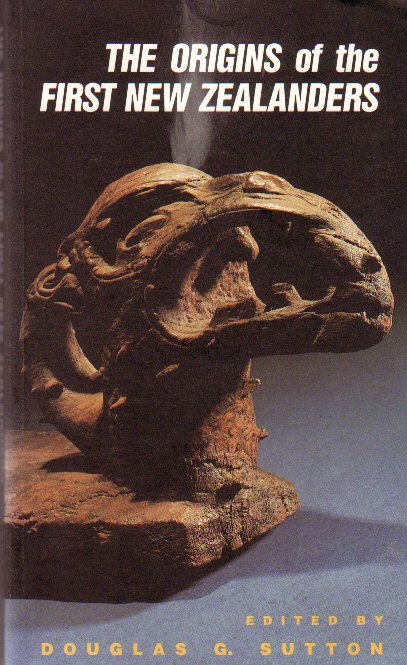
On the facts of pre-European Maori environmental stewardship , the best I've read is a shortish piece by M.S. McGlone et al: 'An Ecological Approach to the Polynesian Settlement of New Zealand' published in The Origins of the First New Zealanders [Auckland University Press, 1994.] Unfortunately, it's not online (although I do quote from it briefly in this article), but it does rather give the lie to the idea of Maori as sound environmental stewards.

Take bird life for example. 
"James et al estimate that untouched Oceania may have had more than 9000 bird species -- more than the total of surviving species on Earth today. Most of this incredibly rich fauna was eliminated by the direct or indirect effect of [pre-European] settlement... The amount of accessible fat and protein per square kilometre on a Pacific island may have been unequalled anywhere in the world...  

Direct evidence exists for this superabundance of bird and marine resources on unexploited islands... In the initial settlement period [of New Zealand], the early abundance of bird bone must have represented a truly incredible exploitation rate... [Yet] NZ midden evidence shows that the consistent exploitation of birds in the late prehisoric results in few bird-bone remains...

The extinction of birds other than moa and of reptiles, and the shrinking of the range of many other species are well-attested (Cassels 1984)... the absence of these species in natural deposits such as caves, swamps and sand dunes after about 1,000 years ago strongly suggests early and vigorous depletion...
In summary: the birds were being killed and eaten in great numbers, in complete disregard it seems of any long-term consequences.

The case is the same for New Zealand flora. Slash and burn agriculture "rapidly destroyed much of the forest cover... By 600 years [Before Present] many animals had been driven to extinction or close to it, and very large areas of country, even in remote inland South Island valleys, were being burnt regularly... A degree of burning may been beneficial, for a [short] time at least."

However, over the longer term: "Extensive burning of inland valleys and ridges offered no obvious advantages in terms of food production..." The result of indigenous environmental stewardship over the longer term? Population grew rapidly in the North Island of NZ from 800 years BP, before slowing down about 400 years BP (following the major forest clearance phase) and plateauing about 200 years BP at about 100,000 when resources began diminishing (see graph at right).
After the initial settlement phase, New Zealand moved directly into a subsistence mode which characterised other island populations only during famine or when pushed into highly marginal lands... By the end of the prehistoric period New Zealand was no longer resource-rich, and the very scarcity of resources and reliance on hard-won wild foods had created a situation from which no larger political entities could easily arise.
So the idea of Maori as sound environmental stewards is not supported by the archaeological evidence. As 'sustainable' environmentalists they just weren't. So how to explain then the apparent status they now possess in the environmental movement? The reason is more widespread than is contained in environmentalism alone.

I think there's perhaps three legs in answer to the question, all related.

1. The Noble Savage

The first is the notion, first given currency by Rousseau, of the 'Noble Savage' -- the romantic idea of wild, untamed human creatures 'uncorrupted' by civilisation. It might be noted that this creation of 'romantic primitivism' was postulated entirely without evidence.

As Roger Sandall amongst others has noted, "A 'savage,'' untouched by civilization, would be akin to an animal, and neither noble nor a good role model for a society. By viewing civilization as something that corrupts or taints a person's pure or natural state, 'new tribalists' are succumbing, like Rousseau, to the romantic idea that the natural state of a human being, without the moderating effect of civilization, is somehow better. To the critics this notion is easily refutable, either by comparing human quality of life before civilization, or as humorist P.J. O'Rourke pointed out, by considering the natural state of children."
In Sandall's view, [summarises Wikipedia] romantic primitivism places far too high a value on cultures that were often characterised by, among other aspects, limited human rights, religious intolerance, disease and poverty. Other negative aspects he discusses include domestic oppression (usually of women and children), violence, clan/tribal warfare, poor care of the environment and considerable restriction on artistic freedom of expression.
'The Four Stages of Noble Savagery: The Moral Transiguration of the Tribal World' is the Appendix to Sandall's book, 'The Culture Cult,' and is highly readable on this question. He concludes by discussing the 'Disneyfication' of the 'Noble Savage':
Sentimentalism begets puerility. The ruthless scalpers of yesterday become Loving Persons. One-time ferocious fighters are discovered to be Artists at Heart. Hollywood becomes interested...  
Combined with this a suffocating religiosity now descends on public discussion, enforced by priests and judges, journalists and teachers, poets and politicians, all of whom claim that native culture possesses a “spirituality” found nowhere else. Soon the primitive is elevated above the civilized. In the words of one observer in New Zealand it is said that the whites “have lost the appreciation for magic and the capacity for wonder” while white culture, besides being “out of step with nature. . . pollutes the environment and lacks a close tie with the land.”

Few are unkind enough to note that “the imagined ancestors with whom the Pacific is being repopulated”—Wise Ecologists, Mystical Sages, and Pacifist Saints—“are in many ways creations of Western imagination.”

Just like Pocohantas. Or Chief Seattle.

2. 'The National Question'

The second leg is specifically political, the idea that Lenin called 'The National Question' -- a specific strategy adopted by Marxist-Leninists to help destabilise a colonised country by use of the grievances, real or otherwise, of indigenous populations.

This movement came to attention in NZ in the late seventies (made most visible with the 'Treaty is a Fraud' movement), and you might say that reached its apogee under Neville Bolger's appeasing stewardship (when it suddenly transmogrified into an'Honour the Treaty' movement).

When mainstream Marxism collapsed following the collapse of the Berlin Wall -- and with it any claim that Marxist societies would ever be able to produce (or be good environmental stewards) -- rather than give up their authoritarianism, the custodians of 'The National Question' stampeded into local and overseas environmental movements. Consequently, the numbers of 'National Question' adherents and other fellow-travellers (the gullible type whom Lenin called Useful Idiots) who call themselves 'green' but are still red on the inside would seem to be quite large.

3. Multiculturalism

The third leg, related to and in some sense underpinning both, is the notion of 'multiculturalism' -- the idea that all cultures are equal (apart, that is, from the cultures of the west). 'Multi-culti is one of the many foolish notions of postmodernism, (encompassing both moral relativism and political correctness) that captured the academies in recent years.

Naturally when the least are made equal to the best, the least win out. If all cultures are asserted (without evidence) to be equal, then one is disarmed from finding evidence that would disprove such an assertion. To find and assert such evidence would, according to the multiculturalist, be 'racist.'

The consequence is this: If one is disarmed from judging a culture -- which is one of the goals of moral relativism -- then the worst cultures are left free from moral judgement, and moral judgement itself becomes bereft of any evidential-base: the only immorality to a multiculturalist is to challenge the assertions of multiculturalism. That too would be racist.

But as Thomas Sowell points out, you can judge cultures, and in fact if human life is our standard then morality demands that we should judge them.

Cultures [he insists] are not museum-pieces. They are the working machinery of everyday life. Unlike objects of aesthetic contemplation, working machinery is judged by how well it works, compared to the alternatives. The judgment that matters is not the judgment of observers and theorists, but the judgment implicit in millions of individual decisions to retain or abandon particular cultural practices, decisions made by those who personally benefit or who personally pay the price of inefficiency and obsolescence."

Anyway, on this last point you might want to have a good look at:

REFERENCES CITED ABOVE IN McGLONE et al:
- Cassells, R., 1984: 'The role of prehistoric man in the faunal extinctions of New Zealand and other Pacific Islands,' in Martin et al Quaternary Extinctions, Uni of Arizona Press.
- James 
et al, 1987: 'Radiocarbon dates on bones of extinct birds from Hawaii,' Proceedings of the Nat. Academy of Sciences of the USA, 84.
- Leach, H.M., 1980: 'Incompatible land use patterns in Maori food production,' 
New Zealand Archaeological Ass. Newsletter, v.23.

UPDATE: Matua Kahurangi takes a look at a current example of non-kaitiakitanga where bureaucratic management, bad incentives and pisspoor efforts at conservation combine in the worst of all worlds ....

For years, the Ureweras have been celebrated as a showcase of iwi stewardship and environmental guardianship. But the reality is far bleaker. Tūhoe leadership is presiding over mismanagement, neglect, and a shocking lack of accountability, turning what should be a model of co-governance into a cautionary tale of waste and incompetence. ... huts and infrastructure deliberately left to rot or burned down, sensitive areas mismanaged, and allegations of intimidation or threats towards white Kiwis attempting to access the land. These are not isolated incidents - they are a pattern.

Monday, 6 February 2023

It's the chieftainship that's still the problem


THE NEW PRIME MINISTER heads up to Waitangi this week with all his hangers-on expecting, I daresay, to see his brief honeymoon period challenged by tribalists still angling to be bridesmaids in ongoing "co-governance" nuptials between Crown and tribal "leaders." Whatever that unfortunate phrase might mean.

Ever wondered why, in a world that's said to be about individuals and individual achievement, we still seem to have government support of a tribal system? Any challenge to which, even in the name of simple individualism, is branded "racist."

What happened? How come these putative leaders see no future for their own various hangers on except through government handouts? What happened to genuine independence?

THOUSANDS OF YEARS AGO, while European sailors were timidly tipping about the shores of the Mediterranean, terrified to leave sight of land for fear of who-knows-what beyond the horizon, intrepid Polynesian voyagers set out across the vast blue Pacific Ocean, half a hemisphere wide, to explore and occupy its many uncharted islands. Centuries later, as the world warmed, several of the most intrepid eventually discovered and settled in New Zealand. And then for just over five-hundred years, isolated from the rest of the world, they developed their own culture. They became Māori.
So in that great migration "out of Africa," these islands down here were the world's last great land-mass to be settled by human beings. And then, after half-a-century of autarchic ingenuity, they were almost the last to be brought back into the worldwide division-of-labour.

This sort of conquest and survival should be something to celebrate, no? The tale once proudly told of the Vikings of the Sunrise. Yet if the headlines are to be believed, the descendants of these former adventurers, the so-called tribal "leaders" of the day, see their own great conquest as creeping tribal capture of the government chequebook.
What a bunch of schmucks.

Tribal life


THESE SOUTH PACIFIC 'VIKINGS,' who were these islands' first settlers, were welcomed into the worldwide division-of-labour 250 years ago by explorers, whalers, sealers, timber-traders, and assorted beachcombers, wanderers and adventurers, who offered Māori things for their labour they'd never seen before. And in return for tools, technology and new foods they offered and sold them, Māori in return sold them trees and flax and kumara, and crewed ships, built houses and travelled the world.
But life down here was still mostly tribal -- serfs, and sometimes slaves, overseen by an aristocratic caste of mostly hereditary bossyboots.

However: The treaty signed at Waitangi by tribal chiefs and a recently-arrived Royal Naval captain promised all these New Zealanders their own Emancipation Proclamation, and held out hope of liberating tribal serfs from tribalism. Instead, 180 years later, we are barrelling down a path back to tribalism. Something Elizabeth Rata has called "neo-tribalism": the intentional production of a neo-tribal elite who are busily "marching through the institutions," in which they play "a decisive and self-interested role in controlling shifts in the interpretation of the treaty of Waitangi." [1]

The result: the empowerment of a neo-tribal elite, in which tribal leaders have the upper hand again. And instead of the hope and optimism of those early adventurers, the predominant emotions now are shame and guilt -- shame as a necessary precursor to this tribal shakedown.

Something clearly went wrong.

One reason is the way that treaty was written: hastily. It was written in just a few days by folk wholly unqualified to write a thing that some erroneously call the country's "founding document." It's not that, and never has been. And nor does it contain enough to merit that description.

But what it does have is the material which the neotribalists have been able to exploit. One of which is the problem of 'chieftainship.'

The problem of chieftainship


THE PROBLEM IS THIS: that instead of the treaty being written to protect individual Māori, it promised instead to placate tribal chiefs. It's right there in the wording and in all the arguments today about rangatiratanga. It's understandable. After all, it was their signatures the British Colonial Office was after before allowing colonisation here to receive their imprimatur. "Alive to the record of native extinction that had come with settlement in Tasmania and the Caribbean, and was threatened in Australia," the treaty's aim was to "recognise the rights of the Māori as subject in the agreement, with rights and interests to protect." [2] But in placating those chiefs of the 1840s, instead of promoting individualism and recognising real individual rights, the document has helped promote the neotribalism of today.

It's been argued -- and I've been one of those doing the arguing -- that the Treaty of Waitangi liberates individual Māori. It should have done -- it surely should have treated all Māori as individuals instead of as members of a tribe. But it really does nothing of the sort except by implication.

Instead, as written, it cemented in and buttressed the tribal leadership and communal structures that already existed here -- encouraging the survival of this wreck of a system until morphing, as it has done today, into this mongrelised sub-group of pseudo-aristocracy: of Neotribal Cronyism.

The problem was there from the start. One of the trade goods most sought after in these years of first contact was the musket. And Māori were devastated by the "musket wars" so eagerly embarked up on by every tribe -- eagerly, that is, until the corpses piling up became too much even their hardy stomachs. At which stage most simply hoped for some kind of peace.

But it wasn't individual Māori who had been trading for those muskets, it was the tribal leaders; and it was their own slaves and tribal "serfs" they put to work to cut and process the flax that bought the muskets (one ton of flax was said to buy one musket). And it was their own slaves they sometimes tattooed to "process" the slave into a shrunken head or mokomokai that could also be traded for muskets. (One mokomokai/one musket was said to be the going rate.) This first contact, and the Musket Wars that followed, only served to reinforce rather than diminish the tribal control -- and when a Treaty with Queen Victoria was offered, one primary motivation of trial chiefs to sign was to have the post-war peace enforced by these pakeha outsiders. Another was to preserve their own power, their rangatiratanga as tribal leaders.

Once they recognised what was on offer, the single sheet of parchment written up by William Hobson, James Freeman, James Busby, and Henry and Edward Williams, came as a boon to most of them.

The Offer

MĀORI IN 1840 GENERALLY paid more attention to oral discussion than to written documents, and there's enough evidence to suggest those wily old chiefs knew precisely what they were being offered at Waitangi: the protection of their own power.

As I'll explain here, in three short clauses and a preamble, what they discussed and what was read to them in 1840 was this [3]:

PREAMBLE

The treaty's preamble states the "concern to protect the chiefs and the subtribes of New Zealand" and the "desire to preserve their chieftainship." Nothing in that to promote or protect individualism. Everything to preserve "chieftainship" and to protect the chiefs in their rule.

CLAUSE 1

In Clause 1 the chiefs grant the Queen complete governorship -- kawanatanga katoa-- over these islands. Non-chiefs, i.e., individual Māori, are neither asked about this nor recognised. Because they are not part of this agreement. 

CLAUSE 2

In Clause 2 the same theme is there again: ignoring the rights of individual Māori and protecting the chiefs in their land, forests and fisheries. Specifically, protecting "the chiefs, the subtribes and all the people of New Zealand in the unqualified exercise of their chieftainship [their tino rangatiratanga]" over all their various treasures -- while prohibiting their sale to anyone but the government. 

Yes, there's a mention there of "all the people of New Zealand" (tangata katoa o Nu Tirani). But unless you're a rangatira yourself, your own personal rangatiratanga was pretty close to zero. You didn't have any. 

So the effect of this clause (unless you're a rangatira yourself) is neither protection nor recognition of full ownership nor real property rights, except perhaps by implication. After all, Māori of 1840 had no such concept of rights, except perhaps for small personal possessions; and no words for "owner," so difficult for a translator to find one. Yes, they could express ownership for these small things at least -- the preposition na for example (or sometimes no), meaning 'belonging to.' [4] But the Williamses did not use these words. Instead, their agreement promised to protect only the unqualified exercise of chieftainship -- something not available to "all the people of New Zealand," even if they do get a mention, but only to those of that status. Only chiefs

So this promise of "rangatiratanga" undercuts everything else, as the chiefs themselves understood.

CLAUSE 3

Clause 3, however, appears to have something for everyone. Here we read the promise to "protect all the ordinary people of New Zealand," and to "give them" the "same rights and duties of citizenship as the people of England." (Ka tiakina e te Kuini o Ingarani nga tangata maori katoa o Nu Tirani ka tukua ki a ratou nga tikanga katoa rite tahi ki ana mea ki nga tangata o Ingarani.) Not to recognise rights, which is how it should have been written, but to give them, which makes them a political gift -- the gift of those who do exercise sovereignty by this treaty: the governor and the chiefs. 

And the translation (rendered above) is even worse. Lacking a word for "rights" -- the concept itself being only two centuries old, by then, and poorly understood even by those writing up these words -- the offer essentially reads as being to "protect all the natives of New Zealand" and to "grant them all the same conditions as she has for the people of England."

This is thin gruel indeed. 

And as any student of law or the history of feudalism or the welfare state might tell you, it's a very different thing for a government to promise to protect rights, than it is to promise to protect people. The former leads to a robust individualism; the latter to a wet mollycoddling paternalism.

And by then, with only one page of parchment, any hope of  an individualist interpretation of this Treaty is gone -- and those with "a decisive and self-interested role in controlling shifts in the interpretation of the Treaty of Waitangi" are now able to interpret this not as a promise of individual rights (since earlier clauses and the preamble take precedence), but instead as the chiefs essentially holding the rights of their people in trust, with the governor "being or becoming a 'father' for the Māori people." 

No surprise then that "this attitude has been held towards the person of the Crown down to the present day, shaping (according to the self-interested neotribalists who now interpret these things) "the continued expectations and commitments entailed in the Treaty." [2] 

It's evident from documents of the time that the Colonial Office in London had not intended to lock Māori up into that pre-existing tribal structure. Their intention was, as that last clause almost says, to recognise the same rights in every Māori as were enjoyed by all British citizens. 

But the treaty's wording and practice has essentially limited those rights while elevating chiefly status. It's the chieftainship, stupid. In other words: the problem is failing to properly recognise and to protect individual rights -- and instead to protect and nurture the status of those tribal leaders.

Is it any wonder today's tribal leaders favour the perpetuation of the tribal structure? Any surprise that the feudal structure continues? Or that today's neotribalists wish to continue benefiting from their feudal privileges of the past? With the government as "father" and taxpayer as today's serf ...

Poor drafting, poor treatment

WITHOUT A DOUBT, GOVERNMENT and the mostly-British settlers often treated Māori poorly in those early days. But the biggest structural harm was the failure to properly recognise them as individuals instead of as part of a tribe. By treating all Māori as part of a collective, there were few chances offered to change this trajectory -- and when they were tried, they were poorly done. The poor draftsmanship of this treaty is reflected in the poor treatment of Māori in those early days.

As a rights-respecting commentator says of the treatment of native Americans in the United States of America, "it could have been done in a more rational way, a much more rights-respecting way, and in a way that would have led to a lot less violence at the end of the day." (Later quotes are from this same source.) It could have been done here in a way that recognised Māori as individuals, with individual lives, rights and choices. But for the most part, it didn't.

Yes, colonisation here was far less violent here than in Australia, or in the Americas. And thank goodness for that. It was still not entirely peaceful here, but in the Americas and Australia it was savage -- particularly if you think of how the British treated the Aboriginals in Tasmania, or the Spaniards treated the natives of South America. And in the case of the US of A itself, "the American government made treaties with the Indians and then reneged on them whenever it was convenient to do so." [5]

Not so much here, at least. The treaty signed here was offered with the best of intentions, but the poorest of drafting. It barely lived up to the intention, and the neotribalists now exploit the drafting.

Individuals possess rights (not collectives)

But the biggest mistake, and the biggest ongoing tragedy -- there, as here -- is that the respective governments did not treat either Indians or Māori as individuals possessing rights. They treated them instead just as members of a tribe. Of a collective. Not as individuals with their own individual rights demanding recognition and protection, but as members of a tribe whose chief no longer held the power of life and death, but still held the power of property, and of making choices for them all.

And therefore [in the United States] all the deals, all the negotiations, were between the U.S. Government and a tribe -- a tribe who was fundamentally a collectivistic unit that was oppressing its individual members. And what the American government in my view should have done was in a sense annex the Indians into America, recognised their innate individual rights (the fact that every Indian like every human being on the planet has individual rights), protected those individual rights under the law, divvied up the property of the tribe among individuals (let American Indians own their own land, not just give it and have the tribes own reservations; the whole idea of reservations was a horrific idea). 
They should have basically integrated Indians into American society: by treating them as individuals, by endorsing individualism among the Indians.
And then, if the Indians then wanted to get together and live in a commune, then so be it.  But the American government's position should have been: "We are dealing with you as individuals. Here is your land; here is John Smith's land; here is somebody else's land... If you want to now unite those lands and do some collective-type stuff then that's your problem. But here's the benchmark: 'We're a country of individuals. That's the principle'." 
And instead, they didn't do that. There was a lot of racism and there was a lot of just treating them as a collective and, as a consequence, slaughtering whole villages and so on. 
Now, that is not to say that there weren't a lot of American Indians (and a lot of indigenous people around the Americas) who were very violent and needed to be dealt with violently. I'm not criticising violence when it was motivated by self-defence. 
    I am however criticising violence when it was not necessary for the defence of the European immigrants or settlers, and there was basically an attempt just to annihilate certain indigenous peoples. 
And again that happened more in Latin America than it did in the United States of America. But it happened [in the US] as well. So, you know, it's a tragic part of history and to some extent inevitable because it seems to happen whenever a kind of a civilisation encounters barbaric tribes, barbaric peoples, that inevitably lands up in a physical violent struggle. 
    I think that particularly in the United States of America it could have been done in a more rational way, a much more rights-respecting way, and in a way that would have led to a lot less violence at the end of the day. [5]
Could it have been different here? Less violent? More rational? More rights-respecting? Yes. Yes, of course it could. But reinforcing tribalism today will not fix a single historic tragedy. And in any case, the guilt-ridden politics of today -- shaming today's New Zealanders by the actions of people in the past -- is not primarily about history anyway. 

The shaming of New Zealanders today is intended simply to precede and encourage their ongoing shakedown tomorrow. That's the effect of today's neotribalism: to put taxpayers on the hook for the perpetuation of this chiefly privilege.

Because, you see, in this new postmodern neo-tribal age of identity politics and cancel culture, history doesn't so much provide lessons from the past as an arsenal full of ideological weapons. The neotribalists, and their enablers, are happy to pick them up and use them. You should be ready to counter them.
* * * * * 

NOTES: 
1. Elizabeth Rata, '‘Marching through the Institutions’: The Neotribal Elite and the Treaty of Waitangi,' Sites (December 2005)
2. James Heartfield, The Aborigines' Protection Society: Humanitarian Imperialism in Australia, New Zealand, Fiji, Canada, South Africa, and the Congo, 1836-1909 (London, 2011) p. 126
3. Te Tiriti: Translation of the te reo Māori text by Hugh Kawharu
4. Raymond Firth, Economics of the New Zealand Maori (Wellington 1972), pp. 338-366 passim
5. Yaron Brook, 'Q: To what extent was the European treatment of the indigenous peoples of America immoral?' www. Peikoff.Com (3 August 2015)

NOTE:
Peter Winsley, for one has a different view, arguing that "Article Two transfers Magna Carta and English common law property rights to Māori. "
These tino rangitaranga rights over land and other properties (taonga) were given explicitly to individuals and whanau as well as chiefs and tribes...
Treaty of Waitangi settlements have so far focused on iwi or hapu on the assumption that these collectives will act for all their members. What is lost sight of is that individuals are specifically mentioned in Treaty Article Two, yet Treaty settlements have not been made to 

individuals. In a future post, this issue will be discussed...

By contrast, Ned Fletcher's recent book, The English Text of the Treaty of Waitangi, argues along similar line to those I've argued above (but, of course, in infinitely more detail -- his book is a fine piece of work). The difference between us, apart from his elevated scholarly stature, is that he evaluates the tribalism as positive and the promises made to reinforce tribalism by treaty to be good ones. I don't.


Tuesday, 9 February 2021

"Histories" without respect for history


Last week Labour's Minister of Education announced the compulsory "histories" that young New Zealanders will now be taught in government schools. 

Oddly enough, says historian Michael Bassett, the "histories" curriculum (for that is what it is) displays the authors' ignorance of some basic historical facts.

For example, far from rushing to add New Zealand to the British Empire, Britain was extremely cautious before dispatching William Hobson; the Colonial Office was seriously worried that the Musket Wars between Maori had reached the stage where nothing short of military intervention would protect Maori.

This is combined with an emphasis on three "big ideas" that don't so much summarise local history as sanitise it:

Translated, the first ["big idea"] is that Maori history is fundamental to understanding everything about New Zealand. 

Nothing, in other words, about the ideas and technology brought here by later settlers that we all now enjoy. 

The second one, translated, is that the consequences of unstated, but implied, wicked colonisation continue 'to influence all aspects' of our history. 

As if New Zealand's first and second settlements are the only "histories" to tell about this place, and grievance over the latter the only mode of recounting them.

The third is that colonists’ power exerted over the years has invariably inflicted damage, injustice and conflict on Maori. Nothing about economic development which lifted New Zealand after the Treaty from a state of anarchy ... The development of the modern economy is [also] of no account in the Ministry these days where no one seems to give a thought to where their salaries come from. 

This is the historic equivalent of a cost-benefit analysis that refuses to even acknowledge any benefit.

And, as I predicted, there’ll be no mention of the Musket Wars in the new curriculum. The government is intent on sanitising our history, presumably in the hope that henceforth we’ll all 'be kind.' ... 
    Unless someone has the intestinal fortitude to challenge this new proposed curriculum, history is a doomed subject. Certainly there is nothing in it to enthuse today’s students who prefer action, learning about the wider world, new ideas, wars and international affairs. 

You know, like explaining all those things that give the context to the history of this small island nation.

Bassett heaps blame for the mess:

Superficially, we can blame those ... devising this mumbo-jumbo curriculum, but I think the rot goes far deeper. This report follows on from those recent ones about falling literacy and numeracy in our schools...
    There is a pattern here. Educationally, New Zealand has lost its way.... Coming on top of the alarming reports about our educational performance overall, what is proposed is just another piece of evidence that substantial segments of the country’s bureaucracy, and the ministers who control it, aren’t fit for purpose.

This may be the most relevant local history that the next generation of students will need to learn: the gradual decay of learning in this place.

NB: A former minister himself (though not of education) Bassett studied history at the University of Auckland back when History was the University's third-largest department. He has three degrees in history, was a senior lecturer in history and a member of the Waitangi Tribunal. He has published 13 history books and authored four biographies for the Dictionary of NZ Biography.

[Hat tip Point of Order, from whence comes the short Bassett bio.]

.

Monday, 26 October 2020

"This is the first fact to remember about New Zealanders..."


"For New Zealand is a good country. It has the feeling of being a very old country, though not at all in the European sense where countries are old with the marks of humanity...
    "New Zealand is very old, much older than any of this, and quite untouched by men. Its rocks and mountains are worn smooth by south Pacific winds. They are very cold to touch and very clean. The country, with its sharp hills, gives you the same feeling as the clear salt of the sea. The country is, in fact, so old in itself that none of us have dared to touch it; we have only just begun to live there. The Maoris who came before us moved among the dark heavy trees like ghosts and could have sailed away at any time and never left a mark. We could leave it ourselves now: in a few years the red-roofed wooden bungalows would rot with borer and crumble into the earth. Fern would cover the grassland and, after fern, small trees would come and in time the dark, rich, matted bush again. Other men might come in a hundred years and nothing that we had left would worry them, but they could draw strength as we have done from the sharp, fierce lines of the hills and the streams always running and the wide sea on every side. 
    "This has been another cause of conflict to New Zealanders, that there have never been enough of them nor have they had sufficient confidence in themselves to take over the country, so that they live there like strangers or as men might in a dream which will one day wake and destroy them. 
    "There is nothing soft about New Zealand, the country. It is very hard and sinewy, and will outlast many of those who try to alter it. 
    "This is one reason why New Zealanders, a young people but already with a place in history, are often wanderers and restless and unhappy men. They come from the most beautiful country in the world, but it is a small country and very remote. After a while this isolation oppresses them and they go abroad. They roam the world looking not for adventure but for satisfaction. They run service cars in Iraq, or2 goldmines in Nevada, or newspapers in Fleet St. They are a queer, lost, eccentric, pervading people who will seldom admit to the deep desire that is in all of them to go home and live quietly in New Zealand again.
    "Those who do not go abroad and do not travel are afflicted with the same sad restlessness. They are all the time wanting to set out across the wide seas that surround them in order to find the rest of the world... New Zealanders are all the time standing on the edge of these seas. They spend their lives wanting to set out across the wide oceans that surround them in order to find the rest of the world. 
    "One way and another, those who are going and those who are staying have all the time within them this sad inner conflict and frustration. This is the first fact to remember about New Zealanders, who live in the most beautiful country of the world."

          ~ John Mulgan, from his 1947 Report on Experience 

. 

Tuesday, 31 March 2020

A POLITICALLY INCORRECT HISTORY OF NZ: Preface

So as I've said, I'm writing a book. A new general history of New Zealand. Here's the draft preface to help explain why  ...

A POLITICALLY INCORRECT HISTORY OF NZ

Preface


“Practical men who believe themselves to be quite exempt from any intellectual influence, are usually the slaves of some defunct economist. Madmen in authority, who hear voices in the air, are distilling their frenzy from some academic scribbler of a few years back”
          ~ John Maynard Keynes

“Knowledge is power”
          ~ Francis Bacon
Another New Zealand history? Why now? There are several reasons. Here are some.

There are now five million of us. That’s a decent time to mark how we got to be a place worth being in. Most of us chose to be here, to stay here, to return here – and even those who stay away generally retain their links here for later. This is a place people like to live in; our history helps to explain why.

It’s been nearly ten years since the last major general history, in which time several trends with their roots in decades past have erupted – our growing entanglement with China; the rise of identity politics and neotribalism; “post-truth” politics and the rise of social media; the increasing impact of New Zealanders in the larger world – all of which need explaining and fitting into their context.

And with talk that New Zealand history will be made compulsory in schools, where it’s said a “conversation” about our history will be encouraged, it’s crucial that the conversation, if there is one, is made as wide as possible. That it is actually a conversation, one in which discussion is held from different viewpoints, not just one. Because:
History is no mere list of dates and facts. It is often a contest between sometimes different ways of seeing the past, and what particular events in that past ought to be more pronounced. Many of these interpretations tend to chafe on contact with each other, resulting in history being a discipline that has to accommodate a wide range of views. Maybe this is why successive politicians have been reluctant to support compulsory New Zealand history in schools – it seems too contentious.
    Of course, there are risks that, if done poorly, compulsory history in our schools could veer into the realm of indoctrination. It is no coincidence that one of the first functions authoritarian regimes undertake on assuming power is to produce new history books in order to emphasise the ‘correct’ version of history that is passed on to students.[1]
That it should encompass views other than those favoured by today’s curriculum writers is especially important because “the history students [presently] hear too often focuses on the West’s oppression of the rest rather than its creation of the free markets and free thinking that have lifted billions from poverty and tyranny. How can liberty survive this skewed narrative of the past?”[2]

There are many general histories of New Zealand to choose from with their own skewed narratives, their own ignorance of how the world has arrived at this place of genuine prosperity – while these authors weren’t watching -- at a place where for the first time in all human history fewer than ten percent of people on the planet are living in poverty. Given that poverty is the natural human conditions, it’s this rising prosperity that must be explained. This history will help do that.

Why else is it different? You’ve already picked it up because of the title. Unlike all those other histories you’ve read, this is a politically incorrect history. So if it needs saying, I will say it. Which might challenge you: but that’s the point of reading, isn’t it? To challenge your thinking.

I aim to challenge you on every page with history you may have heard, but analysed here with ideas the politically-correct mainstream would never touch and based on recent research on the contributions of colonialism to human flourishing[3] that throw a whole new light on almost all the stories of our past.

So, the way it tells those stories is different – and not just because I’m unconcerned with the prevailing political correctness of the day. But the stories it chooses to tell are often different too: it’s not just another regurgitation.

Because this history of New Zealand is different. It’s unlike all the others. It’s different in three ways:
1. because of what’s in it– which is unlike most existing general histories of this place;
2. because of how it’s put together– which is unlike almost anyother history you’ve ever read; and
3. because of its razor-sharp focus.
There are many remarkable stories to tell about this place, and many of those other general histories have told them. What I’ve chosen are those that best explain who we are now and how we got here. My focus is literally razor sharp, choosing only those stories from the past most relevant for today -- and slashing away all the rest.
    So, in a sense, while it is a general history of this place, it’s also a history of now –telling these tales about the past to best understand the present.
    Not to use the past for contemporaneous advocacy, of which far too many local historians fall guilty – “weaponising the colonial past”[4] to support the political projects of the day. But instead to re-tell the history of the past to explain the "technologically sophisticated, socially progressive, and politically democratic"[5] mixed-economy place that New Zealand is today.
    Most histories fail to do that. Not one of the general histories of New Zealand attempts it. By failing to even try,
we have denied ourselves a value that only history -- properly pursued– can provide. The facsimile of history we’ve been sold may only rarely illuminate the present, but its fleeting revelations indicate a much greater meaning and power that lie dormant within the subject… a way to make history a vital component of our lives here and now …
The method proposed, says historian Scott Powell, is to throw out any notion that “history is the study of the past.” Like Scott’s recent book, this is a History of Now![6] Because:
if knowledge of the past is to be power, it cannot merely be about the past. It must connect to our lives here and now, in as many ways as possible. It must, in effect, be about the present.
History pursued in this manner is – to coin a term – “present-centric.”
In such an approach the present, which historians typically ignore, is the touchstone of all historical thinking, and history becomes a way to know the world we live in…[7]
New Zealand historians have not just failed to tell this story -- failed to tell the story of now– they’ve failed to tell the full story of the past.

What’s in this history is many of the whole truths they’ve neglected. Being unshackled by any need to be politic, I aim to tell you the truth, the whole truth, and nothing that is post-truth. The whole truth, not partial or made-up truths. I aim to give you the whole context of all the most important events that made this place. What caused them, and what they caused in turn.
    For example, in assessing the reasons for New Zealand’s relative freedom and prosperity the book explains the link with a man from whom the “me too” movement would need a lot of explaining – and with the ability of some talented New Zealanders to turn grass into food, electronics, housing, hardware and machinery.
    In talking about the treaty, the book explains how the work of a missionary, a Royal Naval captain and a Māori politician helped to inadvertently inspire a mass movement today for neotribal colonialism. In telling the story of the skirmishes that ravaged the North Island for several decades, we trace the problems back to a journey undertaken after a long-standing feud in the Waikato decades before.
    In telling the story of New Zealand’s rising prosperity in the late-nineteenth century – to the extent that for several years we enjoyed the world’s highest per-capita income -- we tell how this happened and who should get the credit; and also the real reasons that so many Māori were excluded from this prosperity for so long, and what this has to do with fertility rates and the North American fur trade.
    In recounting the reasons for New Zealand soldiers invading a beach in Turkey on what we now commemorate as Anzac Day, we recall the real reason the troops were sent there – which is one early version of the Russian meddling that is still so topical today.

“Full context”, that is this book’s motto! And I can guarantee full value.

You may be offended by some of the stories. Or hurt. Or even enraged that these people did not always behave the way you would like them to. But remember, you are not inviting these people into your time to live with you by your standards at this time in history, but to live with them in theirs. So, understand – understand fully – before you judge. People rarely see themselves as acting badly; in everybody’s story, they see themselves as the good guy. So, understand their context before you judge them. (Which is good advice in any weather in any case.)
    You should at least, I hope, be challenged, because I do hope to change the way you think about this place.
    Because this is nothing like those other general histories, which despite their length have failed even to tell the full story of the past. Instead, like listening to Morning Report, we hear a very thorough but extremely narrow view of our place, much of it “occluded by the [partial history] of New Zealand biculturalism.”[8]
    One of the biggest differences in my account is focusing less on grounds for grievance, and more on the reasons for our prosperity. The present that we enjoy is prosperous because of what entrepreneurs have done in the past. Yet in every single one of our general histories, and in the overwhelming majority even of specialist histories, the ideas that made the place great are largely ignored in favour of those that (allegedly) divide; and the businesspeople and entrepreneurs who made this country one of the best little places in the world to live are startlingly, even stunningly, absent. The Wakefields aside, for obvious reasons, the very people whose zeal, hard work and acumen built this place barely appear at all in the many histories written about us.[9]
Instead we have a litany of one-sided general histories that focus on New Zealand as if the only thing that happened in two-hundred years is the rise of political correctness, and the fall of political dynasties. What emerges from to many of these books is “political history, Māori history, social history, class history, and the history of identity,”[10]… but not in any way a full history of this place. And when their authors have examined economic life at all, as even they must do if they explore New Zealand’s depression years, for example, their kneejerk Keynesian assumptions and insufficient rigour generally leave them flailing.
It’s as if they wrote a history of local rugby that was all about the linesmen and referees, and then about the volunteers who make the sandwiches, and then never bothered to mention either the players or how they played the game. (And when they do, they confuse entirely the directions in which the two teams are playing!)
On top of this, when one considers that the largest employer of historians in present-day New Zealand are New Zealand tribes, their forestry trust, and the Waitangi Tribunal – and in earlier decades, were employed by various Ministries -- it seems that many are not just narrowly read but hopelessly compromised.[11]

Even New Zealand’s most popular general histories fit this lacklustre bill. 
Michael King’s popular ‘Penguin History of New Zealand’ devotes just nine pages of the first 300 to discussion of New Zealand’s economic development… [W]hat emerges is not a history of New Zealand per se; it is, more aptly, a history of the Māori and politics.[12]
Insightful in those areas, perhaps, but lacking in any context that would give their fuller meaning.
Similarly, in the first half of his 600-page volume‘Paradise Reforged,’ James Belich grants 23 pages to the development of the frozen-meat industry … while other industries and businesses are largely absent. Further discussion on economics and business in this work is generally framed in notions of class and politics…    Equally, there has been an unfortunate tendency among social and general historians to repeat economic generalisations without further investigation. Michael Bassett, for example, in his work on the state in New Zealand, devotes one paragraph to economic development in the 1880s [the years of our own Industrial Revolution]. He repeats a list, often churned out, suggesting that the depression deepened, high government debt caused retrenchment, there was a collapse of meat prices, and unemployment steadily increased. Unfortunately, even a little analysis of such a list reveals that it bursts with inaccuracies… More balanced and better researched is ‘A History of New Zealand’ by Keith Sinclair, and ‘The Oxford History of New Zealand,’ although, in both, economic development is relegated to the occasional chapter – wars, class, and politics are what dominate the historical landscape.[13]
Not that New Zealand’s civil wars and political posturing are wholly unimportant. But here even the popular “specialist” histories fall down. Belich’s bumptious New Zealand Wars for example – in both book and TV programme – “ignores the role played by the tribes whose aims paralleled the government,”[14] takes no measure of the total number of casualties and the social results of this tragic loss of life,[15] introduces wild and unsupported population numbers to bolster his suggestion of steep post-war population decline, [16] and makes several wild, unsupported and highly partisan claims about Māori military technology. Most bizarrely that
“Māori ‘were the first to develop’ modern trench warfare … had ‘invented the anti-artillery bunker’ … [and] that the British Army had learned nothing from its experiences in New Zealand, for it was ‘not taken on board, not fully incorporated into their understanding of warfare.”[17]
None of this, from New Zealand’s premier living historian, is remotely true –and historians without his elevated platform have begun to correct such inanities. “Historians such as Christopher Pugsley, John M. Gates and Peter Maxwell, [Matthew Wright], and the cultural historian of Polynesia, Paul D’Arcy, have all contested Belich’s claims with regard to the origins of trench warfare and the uniqueness of Māori warfare.”[18] British military historian Ian F.W. Beckett has examined, not to say eviscerated, Belich’s claim with regard to “the lessons not learned.” But few have noticed. Belich’s “opinions, particularly in regard to the middle and later phases of the wars, are deficient.” Yet instead of war histories by Thomas Gudgeon, “who fought in a number of the campaigns … and [James] Cowan [who] walked the battlefields in the company of the men who had fought them … the white warriors, but also to the brown,”[19] a 2019 book on New Zealand’s ninetenth-century sovereignty wars can still claim Belich’s thirty-year old tome “remains the seminal work on the wars.”[20]
    Something is clearly wrong in the places where mainstream history is written.
    Meanwhile, the general histories of Belich and others still peddle long-exploded myths about the runholders and pastoralists who kicked off New Zealand’s prosperity, dismissed as “oligarchs” and “gentry” while completely ignoring recent literature clearly demonstrating that “the term ‘gentry’ is inapplicable to New Zealand.” This is, too often, how the historical “conversation” in New Zealand has been happening: by too many so-called eminent historians simply refusing to engage in contrary views, with little “conversation” occurring beyond the repetition of acceptable canards.[21]
    So, the corrections to those canards are ignored, and these are still the histories by which most of us have come to know this place’s stories.
    Worse, for many of them the facts of the past are only things to manipulate to make an activist’s point about today; and for all of them, and far too often, the wider history of the world, and the market process and the reasons for this place’s relative prosperity, seems to be a complete mystery.
    The overwhelming focus is politics, local politics, with their expertise on anything outside that woeful. So even when politics does intersect with economics, for example, these historians can talk about lower prices as “disastrous” instead of reflecting that these meant better times (and greater “purchasing power”[22]) for consumers; mention ‘Think Big’ as “unsuccessful”[23] without being able to explain why; or call a Prime Minister who helped extricate New Zealand from the Great Depression before many other places “bone from the neck up”[24] while castigating him for not “economic pump priming”[25] – a more economically bone-headed recommendation being hard to imagine.
    Their politics is overwhelmingly interventionist, making virtually anything written on depression causes and cures suitable only for humour – and their understanding of wealth creation so woeful that to them New Zealand’s most important and formative period of prosperity looks like a long depression.
    The political focus is relentless. They can write a book celebrating New Zealand’s “twenty turning points that mark a defining moment in the development of the country”[26] without mentioning either the Rugby World Cup or the country’s agricultural exports – especially the turning point of exporting refrigerated meat -- that have made us all so well off that we take our first-world comforts for granted! Or the “success” of government subsidised foreign film-making without ever discussing how those resources may have been better spent if left in taxpayers’ pockets – or even discussing why it is that, with some heroic exceptions, New Zealand film-makers seem far more adept at telling children’s stories (especially coming of age stories) than genuinely adult tales.
    Worse, while they all relentlessly discuss Māori issues and Māori land they almost all fail to compare the abysmal results of tribally-held Māori land against the many different forms in which property may be held; they fail to see, let alone describe, the tremendous benefit to Māori, from 1769, of being introduced to the worldwide division of labour (which, to most of them, is in any case a complete mystery); and they are frequently so focussed on their agenda of class, race, gender and politics that, while they might pontificate that someone like Kiri Te Kanawa “enlarged New Zealand’s sense of itself on the international stage”, they are entirely at a loss to explain how the unlikely success of this enormously talented Māori woman “in the great opera houses of the world”[27] fits the over-arching modern interpretation focussing on Māori alienation, class determinism and gender oppression.
    There is something very important missing in these histories. I aim to put it back.
History has failed.
But there is a better way.
We must start with the now.
The historian’s first responsibility is to develop an awareness of the present.[28]
Of the full present.
That is why we begin with the present, to explain first how we landed in this prosperous but politically-correct place anyway ….

The Present

So how to select the most vital facts from the entire history of New Zealand? “All we need to do is to pin down what we mean by ‘important’.”[29]
    All history has both facts and interpretations. So, every writer of history must make choices about which facts to select, and how to interpret them. The writer’s own values, knowledge and acumen guide the choices he makes about which facts are most important, and his own judgement will enable him to tell what they led to, and what caused them. In other words, all history writing is “a selective recreation of the events of the past, according to a historian's premises regarding what is important and his judgment concerning the nature of causality in human action"[30]– which is a mouthful meaning what I just said.
    In my judgement, the story that is crying out to be told in a history of this place (and which hasn’t come close to being told in any of the popular politically-correct general histories) is this: how did this country come to be one of the best little places on the planet in which to live, and what were the hurdles along the way.
    The reason to tell the story is not just because it is a great story. But because if we understand how we got here, we may better understand where we might be going.

The Past

To tell the story in a way that’s easiest to grasp, I give you “Anchor Dates” around which to ground our story[31]: starting you off with the most explanatory facts, the most causal, the ones that best explain the story to begin with. This gives you the “mountain-top view“ of the historical landscape, the bigger picture, into which you can then easily fit the historic periods that the landmark causal events on those dates either set off, or represent.[32]
    The reason is simple: because “to establish an outline of … history, one must think in terms of fundamentals. One must seek the answer that underlies all other answers and sets the context for any further inquiry.
    Using Anchor Dates to ground the history makes the history easier to learn. And it offers a “razor” to slash away the least relevant stories, presenting as a result the most relevant facts in as clear and unambiguous way as possible.
    So, let’s discover our first major anchor fact, to begin answering our central question, which is: how did we all come to be here and prospering the way we are – and what were the hurdles along the way?And let’s start by looking at the time and place we’re in now…

First Question:

What sort of age do we live in now?
Look around you.
Think about the New Zealand you live in today.

If you were here ten years ago, do you think today’s New Zealand is much different to the way it was back then? Like, fundamentally different? Maybe? How about twenty years ago, back to the year 2001? Maybe. Maybe not. 2001 itself was vastly different to the place filmmakers like Ridley Scott and Stanley Kubrick imagined it might be. To viewers of their famous film it would have come as a major disappointment! And on examination it does look remarkably different to the place we live in now, twenty or more years later. Just think, if you went to sleep in 2001 and just woke up today, you would see …
• more political correctness

• more “post-truth” politics

• less mainstream media and the dominance of social media; and at the same time…

• many more threats to free speech

• much increased globalisation, which has had both a good and bad reception

• widespread world success by talented NZ writers, artists, musicians, actors, sportsmen and filmmakers such as Eleanor Catton, xxx, Lorde, Simon O’Neill, Neil Finn, Jermaine Clement, Lucy Lawless, Scott Dixon, Stephen Adams, Taika Waititi, and Peter Jackson

• the cultural supremacy of intersectionalism, xxx, and identity politics

• comedians, commentators and cultural icons terrified to give offence

• increasing wokeness, and the growth of the “pile-on” culture

• the dominance of Te Tiriti in public and private institutions; and with it

• the rise of Neotribalism and its accelerating March Through the Institutions

• increasing irony in culture

• increasing entanglement with China, with all the threats and promise thereof

• housing that is certifiably and seriously unaffordable[33]

• increasing focus on privacy (or lack thereof), security and cyber-security, terrorist threats, especially

• dealing with the threat of both Islamic terrorism and the alt-right terrorist response; and finally
And finally, an ongoing entanglement in America’s “postmodern wars,”[34] some of which our visitor from 2001 would have been around to have seen begin -- but never end!

This is not to say that all is bad. But the good that men are doing (and by “men” I mean anyone of any gender, class or racial disposition who are actually out there doing good[35]) is largely inspired by the ideas from ages past, not those given birth to in this age.
    Since it’s one of the main foci of this book, one way to measure how different the world is today to only a few decades ago is to consider views on colonialism. New Zealand was born as a colonial country. That much is not controversial. What is controversial now is to argue that, by any reasonable standards of human flourishing, colonisation was beneficial. Consider this argument, by Dr Bruce Gilley from Portland University:
"When a more advanced society is given the opportunity to diffuse its economic, technological, administrative, and educational systems to a less advanced society that by and large welcomes its presence, the results are so obviously good compared to what would otherwise have happened in that society that the only interesting questions are how large the positive effects are...[36]
    "[Yet] for the last 100 years, Western colonialism has had a bad name. It is high time to question this orthodoxy. Western colonialism was, as a general rule, both objectively beneficial and subjectively legitimate in most of the places where it was found, using realistic measures of those concepts. The countries that embraced their colonial inheritance, by and large, did better than those that spurned it. Anti-colonial ideology imposed grave harms on subject peoples and continues to thwart sustained development and a fruitful encounter with modernity in many places."[37]
This is clear, well argued and objective, and backed up by a flood of research. And said just a few decades ago would have been largely uncontroversial. But today, in the intellectual climate in which we live, to say this in print in a 2017 academic journal was enough to get people sending death threats to the author, such that the journal felt forced to retract the article.[38]

By way of contrast, what it is acceptable today to offer at universities and to publish in academic journals includes the following:
  • · Victoria University of Wellington offers a “Science Teaching Resource” in ‘Decolonising Our Cities,’ explaining that “Urban planning and design is largely done through the lens of Eurocentric values rather than through the values of the indigenous people … The ‘Imagining Decolonised Cities’ competition was launched, encouraging people to imagine how two sites in Porirua could look if they were designed with Māori values rather than colonial ones.”[39]
  • · A local academic journal publishes an article “discuss[ing] responsibilities for Pākehā to take deliberate and conscious steps to decolonise through reconciliation and dismantle disturbing and prevailing prejudiced attitudes.”[40]
  • · Decolonisation workshops are offered widely. One “Pākehā (non-Māori) Male” offered his dripping wet perspective on what he called “Decolonisation in Aotearoa,” enthusing, “What I learned in the decolonisation workshop is this: Being part of the dominant culture is not a bad or shameful thing. Instead, it creates an opportunity to make conscious, constructive steps in understanding the people of the land. It is obvious to me that the challenge starts with myself, with my pronunciation, practice, values and everyday thinking. Decolonisation brings with it the challenge of personal development, which will in time re-shape partnerships, families, communities and nations.”[41]
  • · A lecturer in Māori environmental management at Victoria University, Wellington, argues that “Within New Zealand, colonisation is alive and flourishing.” (Her article was published not in the mid-nineteenth century but the twenty-first.) “It has embarked on a greater journey of alienating the Māori peoples from their lands, practices and fundamental freedoms, now with new and more powerful tools of oppression." Māori sovereignty activist Moana Jackson draws an analogy between the processes of colonisation and of film-making: ‘Colonisation [he says] is about creating a suspension of disbelief, which requires that those from whom power is to be taken have to suspend their own faith, their own worth, their own goodness, their own sense of value, and their own sense of knowledge. Today, colonisation is a process of image-making, where we’re bombarded by Hollywood about what should be worthy in our lives, and today’s scriptwriters, today’s controllers of knowledge [and therefore research] are the descendants of the old scriptwriters of colonisation’.”[42]
If this makes no sense, it is hardly meant to. This is no longer colonialism; it is postmodern colonialism: intellectuals in thrall to total nonsense.
    The economist John Maynard Keynes used to say that “Madmen in authority, who hear voices in the air, are distilling their frenzy from some academic scribbler of a few years back.” Whether we know it or not, much of the frenzied babbling of today is a result of post-modern scribblers of the distant and not-so distant past — post-modern German and French intellectuals to whom many of our universities’ departments and academics are in intellectual thrall.[43]
    As a result, philosopher Stephen Hicks, author of the best-selling guide Explaining Postmodernism[44] likens this so-called “post-truth” age in which we are living as one of Postmodern Colonialism.[45] Which seems doubly apt, since it mirrors nicely with New
Zealand’s birth as a genuinely colonial nation.
    This postmodern age is marked in New Zealand not just by increasing Political correctness, but by the growing dominance of what educationalist Elizabeth Rata calls neotribal capitalism – a kind of cronyism giving wealth and favour to both a new neotribal elite and to their enablers in the political system.
    And overseas it is still marked strongly, and militarily, by reactions to an event so well-known we mark it with only three letters and a symbol: 9/11; and by our growing entanglement with China. In this new global age, events overseas can be as powerful as those at home.
    As such, we could label this new age as The Age of Neotribal Colonialism– marked perhaps by the date when the Waitangi Tribunal declared that signatories to the Waitangi treaty did not cede sovereignty, while recommending largesse under that same treaty – the reaction to which even from the government, opposition and most commentators and academics was simply a big yawn. In other words, the final surrender of outlook, opinion and local law to postmodern philosophy.[46] "This is not a concern about some trivial detail, but over the fundamental history of our country, which the Tribunal has got manifestly wrong."[47]

So: We could mark the birth of this new postmodern global/colonial age by the date when the Waitangi Tribunal determined that Māori who signed the treaty at Waitingi never ceded sovereignty.


THIS IS OUR FIRST ANCHOR DATE: 2014

It marks the birth of The Age of Neotribal Colonialism

>>>More on this Period in Chapter 11

Increasing globalisation means events abroad inspire even the Period in which we live. But the political, legal, cultural, social, and commercial framework we inhabit here in New Zealand seems (for good and bad) robust and, with glaring exceptions, working.
So, let’s ask ourselves:
       Why do we inhabit the legal, political, commercial, monetary, local government, property, and Māori framework we do today? 
       Wherefrom, despite the increasing globalisation, this growing sense of us having an independent voice? 
Most immediately, legal, political, commercial, monetary, local govt, property and Māori framework we inhabit today was introduced in a few short years by the Fourth Labour Government, who in those few short, volcanic and exciting years overturned nearly everything, often (but not always) for the better. So much so that, despite all the carping about “Rogernomics” since, virtually none of the framework introduced then by Roger Douglas, Geoffrey Palmer, Richard Prebble, David Lange, Michael Bassett, and then by Ruth Richardson et al, has been overturned since. And that’s not only because every politician since has been by comparison so politically timid.

We can mark the birth of this new age by the date of that important election.


THIS IS OUR SECOND ANCHOR DATE: 1984

It marks The Birth of Modern New Zealand

>>>More on this Period in Chapter 10

So why was it necessary for the Fourth Labour Government to overturn so much stuff?
All the red tape, all the controls and the intervention, these weren't all introduced by Prime Minister Piggy Muldoon (as he was known un-affectionately, and deservedly). In every important sense, the “Polish shipyard” of a country that Muldoon was running into the ground was first made that way by all the stuff that the First Labour Government did. 
It wasn’t all overturned by their successors, sadly, and that First Labour Government wasn’t responsible for all of it, but the election of Michael Savage’s Labour Government at the end of the Great Depression seems an ideal date to mark the date that New Zealand embraced the bureaucratic welfare state with true affection. 

We can mark the birth of this new age by the date of that overwhelming election victory.


THIS IS OUR THIRD ANCHOR DATE: 1935

It marks the birth of The Welfare State

>>>More on this Period in Chapter 9

So, what sort of people are we in this young country? 
Are we a separate nation of people to the rest of the world? 
When did we, as New Zealand, first come to notice on the world stage – and to ourselves as something special and apart from the rest of the world, and of the British Empire?
That date was probably the day it occurred to New Zealanders that the idea of invading Turkey to give Constantinople to the Russians – with New Zealanders being the chosen blood sacrifice in that task -- was a bloody stupid idea. 

We can mark the birth of this new age by the date of that failed invasion of the Gallipoli Peninsula.


THIS IS OUR FOURTH ANCHOR DATE: 1915

It marks the Beginnings of Nationhood

>>>More on this Period in Chapter 8

When the New Zealand Army Corps went off to the First World War, they discovered that even though they thought of themselves as British, that (just like the other Australian and Canadian colonial troops) they were on average already taller, stronger and healthier than the average British soldier. 
We were already eating well. Very well. The reason we had been as because of what New Zealanders had done so well for years: which was producing good meat and dairy products. 
There are many vastly poorer places around the world even today. So how come we’re not so badly off here? Because way back in the nineteenth century entrepreneurs and businessmen worked out how to profitably sell refrigerated meat to the other side of the world as well as the wool which we had already been selling them for decades. Turns out, as their mostly-British customers soon discovered, we are the world’s best at processing grass into food and fibre. 
And ever since, to buy our cars, electronic and other goodies from around the world New Zealanders have been exporting “processed grass.” 
To do it New Zealand farmers have become exceptional at applying science to agriculture, and entrepreneurs and businessmen have been tireless in selling new technology to them so that they can produce more and better and cheaper: from better refrigeration and insulation of those early ships, right up to the gene splicing and biotechnology of today. Even down to the humble, but revolutionary, electric fence.[48]
And it all started, or first came together, with that refrigerated ship, the Dunedin.

We can mark the birth of this new age by the date of that first profitable cargo of refrigerated meat.
 

THIS IS OUR FIFTH ANCHOR DATE: 1882

It marks the beginning of New Zealand’s Industrial Revolution

>>>More on this Period in Chapter 7

You will observe that New Zealand farmers, through their commercial agents, were mostly selling their wares to British customers. 
And back here in New Zealand, there was a British flag flying over most government buildings, in which a British legal and political framework was (and is) still used -- and most New Zealanders at that time still thought of themselves as British. 
But those flags were not flying over all New Zealand. 
The Governor called a conference on the beach reserve at Kohimarama to invite Māori to discuss with his Government how they viewed a treaty they had signed twenty years before.
Most were sanguine. But a new Māori movement had arisen in the Waikato, the Kingitanga, whose representatives had stayed away. In their view, the New Zealand Government had not provided all the law promised nor lived up to the benevolent billing with which it had come to the country, and while many settlers remained unhappy at the government’s monopoly over land sales with Māori (the only way by which to acquire new land) many Māori had come to resent the dangerously compromised manner in which the government purchased land from them.
It all came to a head with a land purchase in Waitara which went wrong, very wrong, and which brought all the arguments together. Mix diesel and fertiliser, and all you need is a detonator to set off an explosion. The Waitara purchase was the detonator, exploding into civil war across the centre of the North Island.

We can mark this period of violence by the date of the Waitara Purchase.


THIS IS OUR SIXTH ANCHOR DATE: 1859

It marks the major period of The Wars Over Sovereignty

>>>More on this Period in Chapter 6

So how come a small island on the other side of the world had such a hold on these ones down here in the South Pacific? 
The simple reason was because in 1839, after years of wrangling, three ships from the New Zealand Company set sail from Britain to begin negotiating for land and to survey it for settlement. 
What they brought with them were the ideas of the Enlightenment. 
And what they set off helped rouse a reluctant British government to send out a Lieutenant-Governor, brought an old people squarely into the new worldwide division of labour, and ‘modernised’ New Zealand in the way no other place before it had been. Linking these islands in this way to other human cultures and life around the planet made life here radically different: this Anchor Date marks this important occasion.

We can mark the birth of this new age by the date of the Coming of the NZ Company ships -- with all that led to it, and all that it made possible.


 THIS IS OUR SEVENTH ANCHOR DATE: 1839

It marks the start of Colonial Settlement

>>>More on this Period in Chapter 5

 The reason the New Zealand Company needed to negotiate for land was that there were already people on it. New Zealand wasn’t empty. How that negotiation progressed is fascinating, as you will see, as it is to compare and contrast this process in different parts of the world. 
           But how did British settlers even know this place and these people existed? Because, first and foremost, a Dutch sea captain called Abel Tasman had stumbled upon the place, had a brief but savage encounter, and then left – but not before marking it in his journal and mapping the short stretch of coastline he had traversed. All Europe had taken notice.
           And then several decades later a master navigator called James Cook received orders to sail to the South Pacific to track the great astronomical event called the Transit of Venus – and while here to track down the rumoured Great Southern Continent.
           Instead, he established there were only these islands and, as Tasman had before him, that there were people already here, and doing quite nicely thank you. 
           So how did those people come to be here? That is one of the great tales of sea voyaging by ocean-going canoes, by navigators as adept as Cook but centuries before him. And one of the greatest of those tales, of Maui Fishing up the North Island, is literally a metaphor describing a great and seminal act of discovery.

We can mark the birth of this new age by the date of the arrival of the people and their culture on those great ocean-going canoes.


THIS IS OUR SEVENTH ANCHOR DATE: 1250

It marks the date of Tribal Settlement on The Last Place on The Planet to Be Settled

>>>More on this Period in Chapter 3

So, here’s the overview of all the Anchor Dates – all the most important events we’re going to talk about:

And now we have all our Anchor Dates with which to begin marking out New Zealand’s main Periods of History …

·     1250-1800: First Settlement: Tribal Settlement
·     1800-1860: Colonial Settlement: Prosperity Emerging
·     1859-1872: Internal Wars for Sovereignty: Prosperity Arrested
·     1870-1914: Discovering Prosperity: New Zealand’s First Industrial Revolution
·     1914-1935: External Wars, Depression & NZ’s Second Industrial Revolution
·     1935-1984: Fortress New Zealand: From Welfare State to Polish Shipyard
·     1984-2001: Modern New Zealand: Shackles Broken
·     2001-2019: Postmodern Colonialism & Neotribalism: Shackles Return

… and the observant among you will have already noticed in that diagram above that there’s still one more question-mark there, still one more date to add. 

But all in good time.

In the meantime, we can use those Anchor Dates to begin seeing how they set off the great Periods of New Zealand’s history. First, the overall history, divided into the two main periods of Tribal Settlement and Colonial Settlement ....


… and now, looking more closely at the period of Tribal Settlement …


… and then up close at the period of Colonial Settlement:

So now let’s start to prove to you those dates were so damned important, and the periods to which they gave birth are worth knowing about ….


[1](Moon, 'Compulsory New Zealand history is a turning point for our schools and society', 2019)
[2]Quote from (McGinnis, 2019). Recent accounts, including suggested causes of this dramatic improvement in lives and human affairs, include (Tupy, 2018)(Deaton, 2013)(Wang, 2011)(Gordon, 2016)(McCloskey, 2017)(Rosling, Rosling, & Rosling Rönnlund, 2018)(Norberg, 2016)(Bernstein, 2005), and (Pinker, 2019)
[3]For a literature review of this last see (Gilley, 2019), available at www.researchgate.net
[4](Gilley, 2019), p. 5
[5](Trotter, ‘Blood Sacrifice,’ , 2010)
[6] (Powell, 2019), Loc. 68
[7](Powell, 2019), ibid
[8]Andrew J. May, reviewing Webs of Empire: Locating New Zealand’s Colonial Pastby Tony Ballantyne, Journal of New Zealand History, 49, 1 (2015), p. 146
[9]One exception, pointed out by Ian Hunter, is the outstanding study by Jim McAloon, No Idle Rich, which by examining a broad range of examples overturned ideas about indolent toffs forming a new gentry on the Canterbury Plains; “instead, humble origins and continued industry characterised the Otago and Canterbury rich.” [Jim McAloon, No Idle Rich: The Wealthy in Canterbury and Otago, 1840-1914 (2002); described in (Hunter, 2007)]
[10](Hunter, 2007), p. 21
[11]A leading current example is Vincent O’Malley, whose book The New Zealand Wars (2019)was written while helping spend $859,000 of Marsden Fund money as joint project leader of the Difficult Histories project (www.difficulthistories.nz/our-team.html), which is said to be researching “shifting historical perspectives” of these wars and “ how different groups have commemorated these conflicts over time.” Yet Mr O’Malley’s book promotes one highly-partial revisionist viewpoint of the conflict, and “the [project’s] researchers were visiting a number of historic sites associated with the Waikato War as field research for O'Malley's book.” [See ‘Have we forgotten NZ's violent colonial past?,’ NZ Herald, 6 December 2018, accessed, 2019.] 
In a less partial place, Mr O’Malley and his book would not be the object of this research, they would be its subject. It does however contain a superb collection of paintings, sketches, and photographs, and several excellent and very helpful maps. Value for money!
[12](Hunter, 2007), p. 21
[13](Hunter, 2007), p. 21-22
[14](Maxwell, 2000), p. 11
[15](Wright, 2006), p. 12
[16](Robinson, 2012)
[17](Beckett, 2018), p. 471; quoting (Belich, 1988)
[18](Beckett, 2018)p. 471-472. See especially: Pugsley’s series ‘Walking the Wars’ in the New Zealand Defence Quarterly from 1993 to 2000; (Gates, 2001)(Maxwell, 2000)(Wright, 2006)(D’Arcy, 2000)
[19](Maxwell, 2000), p. 9-10
[20] (O’Malley, 2019), p. 34. O’Malley does tell his readers that “[m]ilitary historians have challenged some aspects of Belich’s work, especially his views on the Māori contribution to trench warfare,” just before taking “some viewers” of the TV series to task for being “critical of what they condemned as a ‘politically correct,’ pro-Māori take on New Zealand’s past.”
“While some later writers have sought to challenge or dismantle Belich’s arguments,” he chunters smugly, “others have tried to build on them.” Which others? Himself, of course. (See (O’Malley, 2019), p. 34-35)
[21]See on this last the demolition of Steven Eldred-Grigg’s unapologetic myth-making in (McAloon, 2002); and McAloon’s comemnts on Belich et al,ibid, p. 31-2, p. 278 (n. 38), p. 279 (n.7), 
[22]Which, bizarrely, is precisely what Tony Simpson argues politiciansshould provide. How? Somehow. See his severely flawed class-warrior histories Sugarbag Years (1974) and Road to Erewhon (1976), which do at least have the redeeming virtue of being rollickingly good agit-prop.
[23] (King, 2003/2004), p. 489
[24](Simpson, 1976), p. 86
[25](Simpson, 1976), p. 91
[26](Moon, Turning Points: Events That Changed the Course of New Zealand’s History, 2013)
[27](King, 2003/2004), p. 513
[28](Powell, 2019), xx
[29](Powell, 2019), Loc. 95
[30](Childs, 1994)
[31]The procedure was developed by historian Scott Powell as one of his techniques of what he calls “History Through Induction.”
[32]The Anchor Dates allow us to use another of Powell’s techniques: Periodisation, his key to History Through Induction.
[33]This is the official opinion of the Demographia organisation, whose annual survey xxxx
[34]“Postmodern wars” being wars fought for no selfish gain to no successful outcome. More on this in Chapter 11
[35]And the fact I even needed to write that is an indication of this “woke” age we’re living in.
[36](Gilley, ‘The Case For Colonialism’, 2018)
[37](Gilley, ‘The Case For Colonialism’ , 2017)
[38]For the story, see ('Occam's Razor', 2017)
[39](VUW, undated)
[40](Amundsen, 2018)
[41](Barnes, undated)
[42](Hutchings, undated)
[43]Example 1, arguing that – like every text – the treaty is inherently un-understandable: 
There are some obvious reasons why the Treaty's meaning isn't obvious. It was drawn up hurriedly, it exists in two versions, it contains ambiguous abstract nouns like 'sovereignty' that cry out for interpretation, and it was communicated to most of the people who signed it in a garbled manner.
    “But there's a more basic reason why the Treaty's meaning will never be settled. Like all texts, it underdetermines its interpretation. 
    “As the great [sic] German hernmeneut Hans-Georg Gadamer pointed out, whenever we read an old text we bring to it aspects of our own situation and our own preoccupations. We can't do otherwise. When we read the Bible, or the Communist Manifesto, or the American Constitution, we do so through the lens of our own era and our own interests.
    “That doesn't mean that there aren't good and bad interpretations of an historical document, and that we shouldn't criticise those who produce bad interpretations.
    “Gadamer argued that to make a good interpretation of an old text we need both an awareness of our own perspective - a critical self-consciousness - and a detailed and respectful understanding of the era in which the text was produced. We need to recognise, in other words, our own subjectivity, while also respecting the integrity of the text.”
[Emphasis mine.]
– Scott Hamilton, commenting at Chris Trottter’s blog, 27 November 2014 (accessed 21 November 2019)
[44](Hicks, 2011)
[45]Quoted in (Cresswell, 2017)
[46]See reactions to this Te Paparahi o te Raki inquiry (Wai 1040)(Waitangi Tribunal, 2014)(Maori Law Review, 2014),(Trotter, 2014)
[47](Moon, 2014)
[48]Unfortunately, however we cannot claim the gumboot. Although, if it weren’t for your gumboots where would you be …

Works Cited

Amundsen, D. (2018, May). ‘Decolonising Through Reconciliation: The Role of Pakeha Identity'. MAI Journal.
Barnes, A. (undated). ‘A Pakeha (non-Maori) Male Perspective of Decolonisation in Aotearoa'.
Beckett, I. F. (2018). ‘The Victorian Army, Maori, and the Conduct of Small Wars'. In J. ed. Crawford, & I. McGibbon, Tutu Te Puehu: New Perspectives on the New Zealand Wars.Wellington: Steele Roberts.
Belich, J. (1988). The New Zealand Wars and the Victorian Interpretation of Racial Conflict. Penguin.
Bernstein, A. (2005). The Capitalist Manifesto: The Historic, Economic and Philosophic case for Laissez-faire.Lanham, Maryland: University Press of America.
Childs, R. (1994). 'Big Business and the Rise of American Statism'. In J. ed. Kennedy Taylor, Liberty Against Power: Essays by Roy A. Childs, Jr.San Francisco: Fox & Wilkes.
Cresswell, P. (2017, September 28). 'Quote of the Day: On the new postmodern colonialism'.Retrieved from Not PC: http://pc.blogspot.com/2017/09/quote-of-day-on-new-postmodern.html
Deaton, A. (2013). The Great Escape: Health, Wealth, and the Origins of Inequality.Princeton: Princeton University Press, .
D’Arcy, P. (2000). ‘Maori and Muskets from a Pan-Polynesian Perspective'. New Zealand Journal of History, 34, 1.
Gates, J. M. (2001). ‘James Belich and the Modern Maōri Pa: Revisionist History Revised'. War & Society, 19, 2 .
Gilley, B. (2017). ‘The Case For Colonialism’ .Retrieved from retracted article in Third World Quarterly, September 2017: https://www.researchgate.net/publication/319605242_The_case_for_colonialism
Gilley, B. (2018). ‘The Case For Colonialism’. lecture to the Center for the Study of Western Civilization, Texas Tech University.
Gilley, B. (2019). ‘Contributions of Western Colonialism to Human Flourishing: A Summary of Research’.
Gordon, R. J. (2016). The Rise and Fall of American Growth: The U.S. Standard of Living Since the Civil War.Princeton: Princeton University Press.
Hicks, S. (2011). Explaining Postmodernism: Skepticism and Socialism from Rousseau to Foucault (Expanded Edition).Ockham's Razor.
Hunter, I. (2007). Age of Enterprise: Rediscovering the New Zealand Entrepreneur.
Hutchings, J. (undated). ‘Decolonisation and Aotearoa – a pathway to right livelihood'.Retrieved from http://www.swaraj.org/shikshantar/ls3_jessica.htm
King, M. (2003/2004). Penguin History of New Zealand.Penguin/Viking.
Maori Law Review. (2014, November). Waitangi Tribunal finds Treaty of Waitangi signatories did not cede sovereignty in February 1840.Retrieved from Maori Law Review: https://maorilawreview.co.nz/2014/11/waitangi-tribunal-finds-treaty-of-waitangi-signatories-did-not-cede-sovereignty-in-february-1840/
Maxwell, P. (2000). Frontier: The Battle for the North Island of New Zealand 1860-1872.Auckland: Celebrity Books for Waitekauri Publishing.
McAloon, J. (2002). No Idle Rich: The Wealthy in Canterbury and Otago, 1840-1914.Dunedin: Otago University Press.
McCloskey, D. N. (2017). Bourgeois Equality: How Ideas, Not Capital or Institutions, Enriched the World.Chicago: Chicago University Press.
McGinnis, J. O. (2019, December 31). The Waning Fortunes of Classical Liberalism.Retrieved from Law and Liberty: https://www.lawliberty.org/2019/12/31/the-waning-fortunes-of-classical-liberalism/
Moon, P. (2013). Turning Points: Events That Changed the Course of New Zealand’s History.
Moon, P. (2014, November 14). Expert: Treaty ruling 'distorts NZ history'.Retrieved from NZ Herald: https://www.nzherald.co.nz/nz/news/article.cfm?c_id=1&objectid=11358654
Moon, P. (2019, September 13). 'Compulsory New Zealand history is a turning point for our schools and society'.Retrieved from Stuff: https://www.stuff.co.nz/national/education/115753287/compulsory-new-zealand-history-is-a-turning-point-for-our-schools-and-society
Norberg, J. (2016). Progress: Ten Reasons to Look Forward to the Future.Oneworld Publications.
'Occam's Razor'. (2017, September 22). Scholar withdraws article “The Case for Colonialism” after social media and professional attacks.Retrieved from Legal Insurrection: https://legalinsurrection.com/2017/09/scholar-withdraws-article-the-case-for-colonialism-after-social-media-and-professional-attacks/
O’Malley, V. (2019). The New Zealand Wars: Nga Pakanga O Aotearoa. Wellington: Bridget Williams Books
Pinker, S. (2019). Enlightenment Now: The Case for Reason, Science, Humanism, and Progress.Penguin.
Powell, S. (2019). The History of Now: A New Kind of History. Kindle Edition.
Robinson, J. (2012). When Two Cultures Meet: The New Zealand Experience. Wellington: Tross Publishing.
Rosling, H., Rosling, O., & Rosling Rönnlund, A. (2018). Factfulness: Ten Reasons We're Wrong About the World--and Why Things Are Better Than You Think. Flatiron Books.
Simpson, T. (1976). The Road to Erewhon.
Trotter, C. (2010, August ). ‘Blood Sacrifice,’ .Retrieved from http://bowalleyroad.blogspot.com/2010/08/blood-sacrifice.html
Trotter, C. (2014, November 25). Nothing Wrong With John Key's History.Retrieved from Bowalley Road: http://bowalleyroad.blogspot.com/2014/11/nothing-wrong-with-john-keys-history.html
Tupy, M. L. (2018, February 16). Julian Simon Was Right: A Half‐​Century of Population Growth, Increasing Prosperity, and Falling Commodity Prices. Retrieved from Cato Institute: https://www.cato.org/publications/economic-development-bulletin/julian-simon-was-right-half-century-population-growth
VUW. (undated). ‘Decolonising Our Cities'.Retrieved from https://www.victoria.ac.nz/__data/assets/pdf_file/0011/1665866/imagining-decolonised-cities.pdf
Waitangi Tribunal. (2014). Te Paparahi o te Raki inquiry (Wai 1040).
Wang, B. (2011, February 27). Poverty in Numbers: The Changing State of Global Poverty from 2005 to 2015. Retrieved from Brookings Institute: Next Big Future: https://www.nextbigfuture.com/2011/02/poverty-in-numbers-changing-state-of.html
Wright, M. (2006). Two Peoples, One Land: The New Zealand Wars.
 .